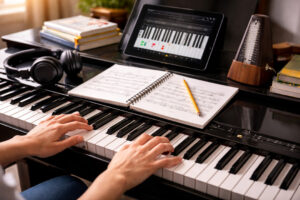
Before anything else, you need access to a piano or keyboard. You don’t need an expensive grand piano what matters is functionality and feel.
A full-size keyboard (88 keys) is ideal because it matches a real piano. Weighted keys are highly recommended since they help develop finger strength and proper technique.
If you’re just starting, a digital piano is often the best choice. It’s affordable, compact, and usually includes headphone support for quiet practice perfect if you’re practicing at home.
Setting Up Proper Posture and Hand Position
Good habits from day one will save you from frustration later. Posture and hand position directly affect your control, speed, and comfort.
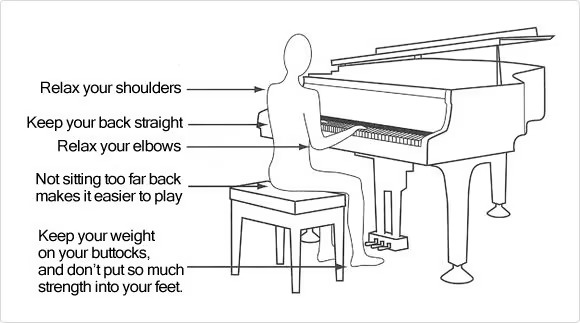
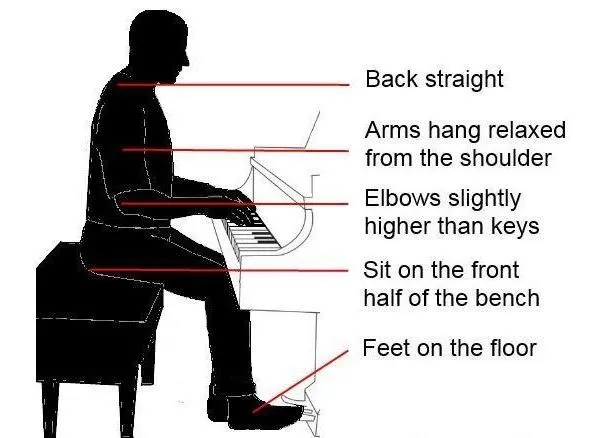
Sit at the center of the keyboard with your back straight but relaxed. Your elbows should be slightly above the keys, and your feet flat on the floor.
Your fingers should be naturally curved, as if holding a small ball. Avoid flattening your fingers or tensing your wrists. These small details may seem minor, but they are the foundation of proper technique.
Understanding Basic Music Concepts
You don’t need deep music theory to begin, but a few essentials will help you progress faster.
Start by learning:
- The names of the keys (A–G pattern)
- Basic rhythm (beats and timing)
- Simple note reading (treble and bass clef)
Think of it like learning a new language you don’t need to know everything, just enough to start forming “sentences” (simple songs).
Creating a Simple Practice Routine
Consistency matters more than long practice sessions. Even 15–30 minutes a day can lead to noticeable progress.
A balanced practice session might include:
- Warm-up (scales or finger exercises)
- Learning a small section of a song
- Repeating and improving what you already know
The key is to stay focused. Short, regular sessions are far more effective than occasional long ones.
Using the Right Learning Tools
Today, you have more learning options than ever. You can choose between:
- Mobile apps
- YouTube tutorials
- Online courses
- Traditional teachers
Apps are great for structure and instant feedback, while videos can help you visually understand techniques. If possible, combining multiple methods can accelerate your learning.
Setting Realistic Goals
One common mistake beginners make is expecting fast results. Piano is a skill that builds over time.
Start with simple goals like:
- Playing your first full song
- Learning basic chords
- Improving hand coordination
Small wins keep you motivated and help build confidence.
Training Your Ears and Coordination
Piano is not just about pressing keys it’s about listening and reacting. Developing your ear will help you recognize melodies and improve timing.
Try to:
- Listen carefully to the notes you play
- Match simple melodies by ear
- Practice hands separately before combining them
Coordination between both hands is one of the biggest beginner challenges, but it improves naturally with practice.
Building the Right Mindset
Learning piano requires patience. Progress may feel slow at times, but every practice session adds up.
Mistakes are part of the process. Instead of getting frustrated, treat them as feedback. The more you practice, the more natural everything becomes.
Staying consistent and enjoying the process is more important than being perfect.
Final Thoughts
Preparing to learn piano is about more than just sitting down and playing. By choosing the right instrument, setting up good posture, understanding the basics, and building a steady routine, you create a strong foundation for success.
The journey might feel challenging at first, but it becomes incredibly rewarding over time. With the right preparation and mindset, you’ll not only learn piano you’ll enjoy every step of the process.