Choosing your first digital piano involves more than comparing prices or sound samples. One of the most important decisions you’ll make is selecting the right key action. For beginners, the debate often comes down to weighted vs. semi-weighted keys — and understanding the difference can directly impact how well you develop technique over time.
While both options may look similar from the outside, they feel very different under your fingers. The right choice depends on your goals, your budget, and how seriously you plan to pursue piano in the long run.
What Does “Weighted” Actually Mean?
A weighted key action is designed to replicate the feel of an acoustic piano. On a traditional piano, pressing a key activates a hammer mechanism that strikes strings. That resistance creates a natural weight and response in the key.
Digital pianos attempt to simulate this experience using internal mechanisms. Many models use hammer action, which adds graduated resistance — meaning lower notes feel slightly heavier, while higher notes feel lighter, just like an acoustic instrument.
This resistance matters. It helps beginners develop:
- Finger strength
- Control over dynamics
- Proper playing posture
- Long-term technical consistency
Without that resistance, transitioning to an acoustic piano later can feel surprisingly difficult. For players who eventually want a traditional instrument, weighted keys provide a more realistic foundation. If you’re unsure how digital actions compare to traditional pianos, this overview of how acoustic piano mechanisms work from Britannica’s acoustic piano explanation offers helpful context.
What Are Semi-Weighted Keys?
Semi-weighted keys sit somewhere between fully weighted hammer action and lightweight synth-style keys. They typically use springs combined with minimal internal weighting to create some resistance — but not nearly as much as true hammer action.
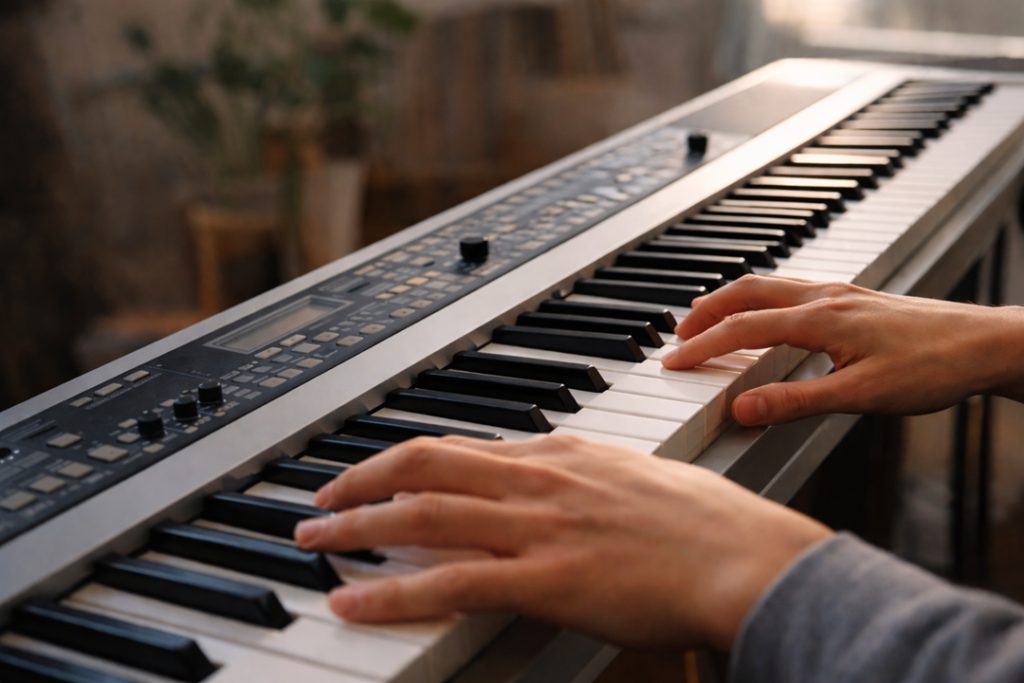
For beginners, semi-weighted keys can feel easier at first. The lighter touch requires less finger strength, which may seem more comfortable during early practice sessions. However, that lighter action comes with trade-offs.
Semi-weighted models often:
- Provide less dynamic control
- Offer reduced realism compared to acoustic pianos
- Limit long-term technical development
They can work well for casual players or those focused on portability and budget. But for anyone aiming to build solid classical or traditional technique, they may feel limiting over time.
Why Key Action Matters More Than You Think
Sound quality often gets the spotlight, but key action shapes your playing experience every single day. The resistance under your fingers determines how you control volume, phrasing, and articulation.
Weighted keys allow you to develop subtle touch sensitivity. Press softly and the tone is gentle; press firmly and the sound becomes fuller and more expressive. This relationship between pressure and tone builds musical awareness early.
Semi-weighted keys still offer touch sensitivity, but the lighter action can make it harder to train your fingers for realistic control. Over months or years of practice, that difference compounds.
If your goal is steady improvement, strong fundamentals, and long-term growth, weighted keys typically provide a more durable learning platform.
Practical Comparison: Weighted vs. Semi-Weighted
Here’s a clear side-by-side breakdown:
| Feature | Weighted Keys (Hammer Action) | Semi-Weighted Keys |
|---|---|---|
| Feel | Closely mimics acoustic piano | Light resistance with spring assist |
| Finger Strength Development | Strong | Moderate |
| Dynamic Control | High | Moderate |
| Transition to Acoustic Piano | Smooth | Adjustment Required |
| Portability | Heavier | Lighter |
| Typical Price Range | Mid to Higher | Budget to Mid |
While weighted models often cost more, the investment typically supports better technique and fewer upgrades later.
Who Should Choose Weighted Keys?
Weighted keys are ideal for:
- Beginners serious about long-term piano study
- Students planning to transition to acoustic piano
- Players focusing on classical, jazz, or expressive repertoire
- Anyone prioritizing authentic feel over portability
Many instruments featured in our best digital pianos for beginners guide use hammer action specifically because it supports sustainable skill development.
For most new players committed to learning properly, weighted keys are the safer and smarter choice.
When Semi-Weighted Keys Make Sense
That said, semi-weighted keys aren’t “bad.” They can be practical if:
- You have a tight budget
- You need a lightweight, portable instrument
- You’re primarily interested in casual playing
- You’re using the keyboard for production or MIDI input
If your goal is flexibility and convenience rather than classical realism, semi-weighted keys can meet your needs.
Long-Term Value Considerations
Many beginners initially lean toward semi-weighted keys due to price. But upgrading later often costs more overall. Investing in a solid weighted key action from the start can prevent the need for an early replacement.
The sweet spot for many serious beginners falls in the $600–$1,000 range, where quality hammer action models provide realistic feel without premium pricing.
When evaluating options, remember: you interact with the keys constantly. That tactile experience influences every practice session.
Building the Right Foundation
For new piano players, the decision between weighted and semi-weighted keys isn’t just technical — it’s foundational. Weighted keys build strength, control, and long-term adaptability. Semi-weighted keys offer convenience and accessibility.
If you’re learning with commitment and want your practice to translate seamlessly to any piano you encounter, weighted hammer action is typically the better investment.
The right key action doesn’t just make playing more enjoyable — it shapes the musician you become