Who has time for weekly piano lessons with a teacher who smells of mothballs? I’ve been playing music for over twenty years. Yet, I struggle to read music.
But, our smartphones can now teach us Beethoven. This change from old-school lessons to piano learning apps is huge. It’s not just easy; it’s a game-changer.
These apps listen to you play, fix mistakes right away, and adjust to your speed. It’s like having a patient teacher always ready to help. No more feeling bad about messing up Moonlight Sonata.
This change isn’t just for me. Recent data shows piano sales soared 133%. More people are finding joy in playing piano with these piano learning apps.
App Reviews: Cutting Through the Digital Noise
The app store is full of digital noise when it comes to piano education. Some apps claim to make you a musical genius in just three days. Others treat you like a trained seal waiting for fish rewards. After trying many apps, I found the best ones that offer quality digital piano lessons without the annoying gamification.
Best For Intermediates – Skoove
Skoove is like the jazz musician in the app world, not the pop star. It’s not just about playing “Happy Birthday.” Skoove gives you real substance for intermediate players.
The app offers flexible pricing: $29.99 monthly, $59.99 for three months, or $149.99 annually. The annual plan is about twelve bucks monthly, which is cheaper than most music theory books.
Why We Love It
Skoove treats you like an adult musician, not a child prodigy in training. Its AI feedback system listens to your playing and offers corrections. It’s like having a music professor who doesn’t charge $200 hourly but knows their stuff.
The app recently added 800+ songs to its library. You can play Sabrina Carpenter, rock classics, anime themes, and film soundtracks. It’s actual music people want to play.
Skoove’s Skoove Duo feature is a highlight. You can book one-on-one lessons with real teachers. It’s like having both GPS and a local guide when exploring unfamiliar territory.
The app focuses on sheet music, theory, sight reading, and improvisation. You’re building real skills, not just learning songs by rote. For intermediates, Skoove offers serious digital piano lessons without childish frills.
Interactive Features
Welcome to the digital conservatory where your phone becomes both teacher and cheerleader. Modern piano learning apps turn practice into a musical conversation.
Imagine having an AI tutor that actually listens. Not just nodding, but really hearing you. Simply Piano and Yousician use technology to analyze your playing.
Flowkey’s “Wait Mode” is the most patient teacher ever. It won’t move on until you get it right. This feature helps you practice without feeling rushed.
Hand-separation options are a big help for beginners. They let you practice each hand separately. It’s like learning to walk before running.
“The best teachers meet students where they are, and these apps do exactly that through customizable learning paths.”
Gamification makes learning fun. Simply Piano and Yousician turn practice into a game. It’s rewarding and enjoyable.
For serious learners, Skoove and Piano Marvel offer tools like looping and sight-reading training. These features help you improve fast.
Pianote’s community features create digital practice rooms. You’re never alone with live lessons and forums. It’s a shared journey.
These piano learning apps understand human psychology. They know when to challenge and when to encourage. They’re more than apps; they’re musical partners.
MIDI connectivity lets the apps give you precise feedback. It’s like having a direct line to your instrument’s soul.
Video integration and real-time feedback are the magic. They show you the right technique and correct your playing. It’s like having a teacher watch your hands.
These features are the heart of modern piano learning apps. They make quality education accessible to anyone with a smartphone and a keyboard.
The tools keep getting better, making the apps more like real teachers. For aspiring pianists, these features are not just extras. They’re changing how we learn music.
Suggested Practice Plans with Apps
Let’s face it: without a good practice plan, you’ll get stuck forever. Modern digital piano lessons change that. They turn musical mess into clear progress.
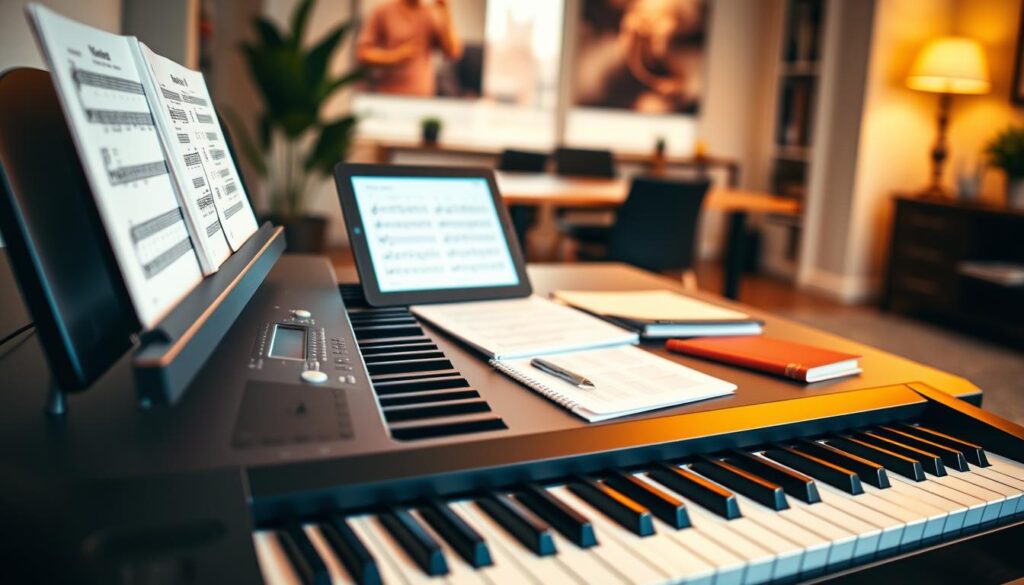
Yousician’s goal-setting feature is like a musical coach. It doesn’t just throw exercises at you. It makes plans based on your time and goals. Want to play jazz at your next dinner? It’ll show you how.
Practicing for 20 minutes a day is magic. It’s enough to see progress but not so long it feels like a chore. Being consistent is better than long, hard practice sessions.
“The difference between playing piano and mastering piano comes down to structured practice, not raw talent.”
Different apps have different ways of teaching. Some like a strict plan, while others like to explore. Here’s how some big apps compare:
| App | Learning Style | Progression System | Best For |
|---|---|---|---|
| Yousician | Goal-oriented | Customizable targets | Motivated self-starters |
| Skoove | Adaptive learning | AI-adjusted difficulty | Personalized pacing |
| Simply Piano | Structured curriculum | Locked levels | Discipline seekers |
| Piano Marvel | Systematic building | Skill-based modules | Foundation builders |
Being able to choose your genre is a big plus in digital piano lessons. You can pick what you love, like Billy Joel, instead of just classical. This makes learning more fun and effective.
Skoove’s AI system changes the game. It adjusts the difficulty based on how you play. It knows when to push you and when to ease up.
Whether you like a strict plan or to explore freely matters. Locked systems help avoid gaps but can feel too strict. Free exploration is exciting but might leave technical skills lacking. Choose what fits your style.
The best plan is one you’ll stick to. These digital piano lessons platforms have done the hard work. Now, it’s up to you to practice regularly. Twenty minutes today is better than two hours tomorrow.
Conclusion
We’ve reached the end of our piano learning app journey. Forget what your old piano teacher said. These apps are not just a gimmick but a real change in music education. They mix Silicon Valley tech with Juilliard teaching methods.
Let’s look at the numbers. For less than two traditional lessons a month, you get endless access to lessons, feedback, and music libraries. These apps make quality education available to everyone. They offer different ways to learn, from fun games for beginners to deep theory for more advanced learners.
The magic comes from combining old and new. Think of these apps as extra practice rooms, metronomes, and teachers who never judge. Your task is to find the app that fits your goals and how you learn. Then, go make music. Your future self will thank you for the effort.