For years, pianists faced a clear choice: the authenticity of an acoustic piano or the convenience of a digital one. Today, that distinction is fading. Hybrid pianos are redefining what modern instruments can offer, blending the physical feel of acoustic action with the flexibility of digital technology.
As more serious players look for instruments that support both performance and practical daily use, hybrid pianos are becoming an increasingly popular solution.
What Is A Hybrid Piano?
A hybrid piano combines key elements of both acoustic and digital instruments. Unlike standard digital pianos, hybrids often feature real acoustic piano actions, including wooden keys and mechanical components similar to those found in grand pianos.
At the same time, sound is produced digitally through high-quality sampling and advanced speaker systems.
| Feature | Hybrid Piano | Digital Piano | Acoustic Piano |
|---|---|---|---|
| Key Action | Acoustic-style (often real) | Simulated | Fully acoustic |
| Sound Production | Digital sampling | Digital sampling | Strings and hammers |
| Maintenance | Low | Very low | High |
| Volume Control | Adjustable | Adjustable | Fixed |
This combination allows players to experience the tactile realism of an acoustic piano while benefiting from the versatility of digital features.
Why Serious Pianists Are Making The Switch
For intermediate and advanced players, technique and expression are closely tied to how the instrument responds. Hybrid pianos address one of the biggest limitations of traditional digital models: authentic touch and control.
The inclusion of real or near-real action mechanisms means that subtle differences in finger pressure translate more accurately into sound. This is particularly important for developing dynamics, phrasing, and control.
At the same time, hybrid instruments offer features that acoustic pianos cannot provide, such as silent practice with headphones and integrated recording tools.
This balance makes them especially attractive for serious students and experienced players who need both realism and flexibility.
The Advantage Of Silent Practice
One of the most practical benefits of hybrid pianos is the ability to practice silently without sacrificing playing feel.
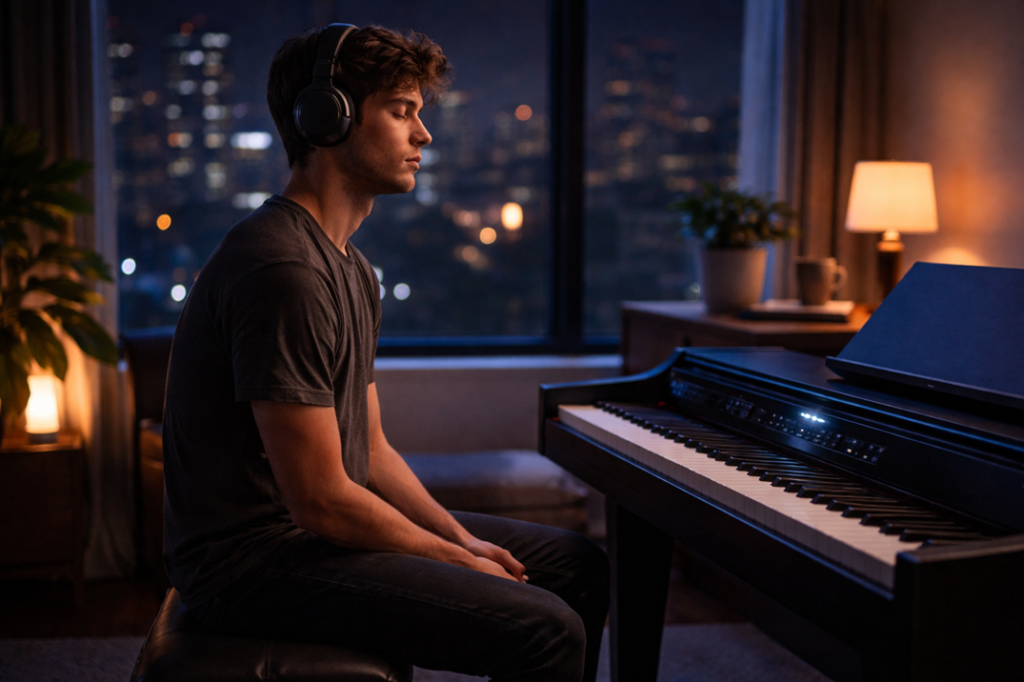
In traditional acoustic settings, practicing late at night or in shared living spaces can be challenging. Hybrid pianos solve this problem by allowing players to switch to headphone mode while still using a realistic action.
This makes them ideal for musicians living in apartments or balancing busy schedules.
For players working on demanding material—such as developing speed through advanced arpeggio exercises—the ability to practice consistently without interruption can significantly improve progress.
Sound Quality And Advanced Sampling
Hybrid pianos rely on sophisticated sound engines that replicate the tone of high-end grand pianos. These systems capture multiple layers of sound, including resonance, key release noise, and pedal interaction.
Modern hybrid models often sample world-class instruments, delivering a rich and expressive tone across all dynamics.
Unlike acoustic pianos, which require tuning and environmental control, hybrid instruments maintain consistent sound quality regardless of temperature or humidity.
This reliability is another reason why many pianists are incorporating hybrid instruments into their daily practice routines.
Built-In Technology For Modern Musicians
Beyond sound and touch, hybrid pianos include features designed for contemporary learning and performance.
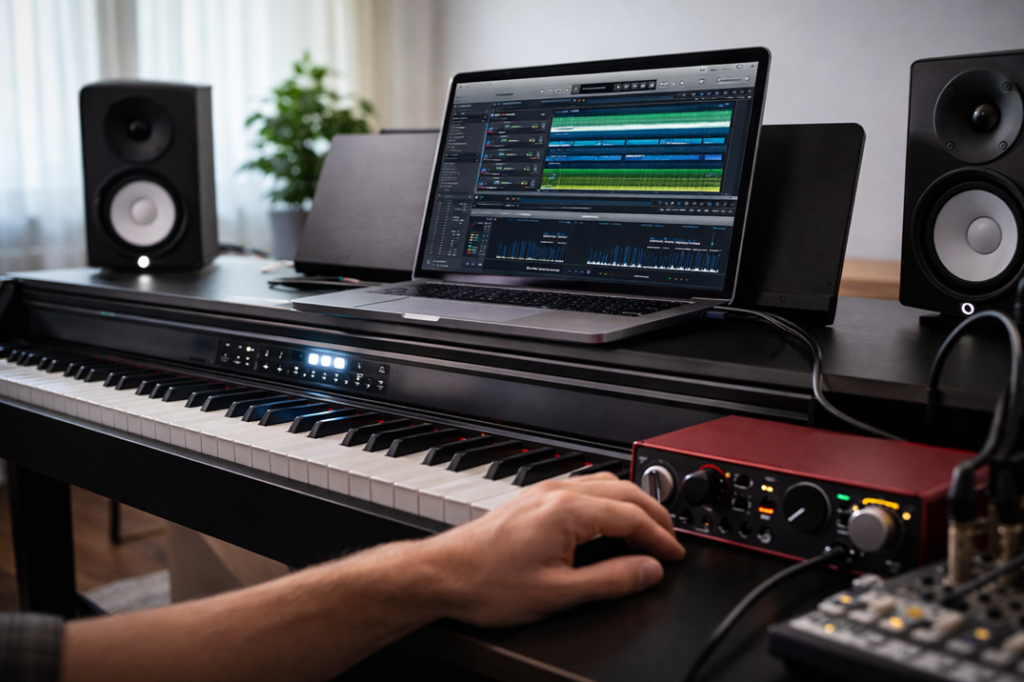
These may include:
- Recording and playback functions
- Bluetooth or USB connectivity
- Integration with learning apps
- Multiple instrument voices
These tools allow musicians to analyze their playing, experiment with different sounds, and connect with digital learning platforms.
According to insights from Yamaha’s hybrid piano innovation overview, the integration of acoustic mechanics with digital control systems is shaping the future of piano design.
This combination supports both traditional musicianship and modern practice habits.
When A Hybrid Piano Makes Sense
Hybrid pianos are not necessarily the best choice for every beginner, primarily due to their higher cost compared to standard digital models.
However, they become increasingly valuable as a player’s skills develop.
They are especially well-suited for:
- Intermediate to advanced students
- Pianists transitioning from digital to acoustic instruments
- Players needing silent practice without compromising feel
- Musicians seeking a long-term, versatile instrument
For those who want to invest in both performance quality and practical usability, hybrid pianos offer a compelling solution.
A New Standard For Modern Piano Playing
Hybrid pianos represent a significant evolution in how instruments are designed and used. By combining the realism of acoustic action with the advantages of digital technology, they bridge a gap that once forced pianists to choose between two very different experiences.
As more serious players look for instruments that support both artistic expression and modern lifestyles, hybrid pianos are quickly becoming a preferred choice.
They do not replace acoustic pianos, but they expand what is possible for today’s musicians—offering a new standard for practice, performance, and long-term development