Congratulations. You’ve brought home a sophisticated consumer electronics piece that creates art. It’s sleek and silent, ready to bring Beethoven to your living room.
But let’s be real. Owning this instrument is like having a smart, expensive pet. It doesn’t need walks but needs care and attention.
Your device is different from its acoustic cousin. It fights neglect, not nature. It remembers every note you play.
This guide is about more than dusting. It’s about keeping the sound and touch connection alive. We’re diving into the philosophy of care, where every action has a purpose.
Forget the strict tutor with a metronome. This is your guide to circuit boards and keys. Let’s start.
Daily Care Routine
Keeping your digital piano clean isn’t about deep cleans. It’s about a simple, daily habit. Think of it like brushing your teeth—do it every day to avoid problems later. It’s not about being obsessive; it’s about showing respect for your instrument.
Start your daily piano maintenance with a soft, microfiber cloth. This cloth should always be ready to clean your piano. Before playing, gently wipe the keys. This prevents dust and oils from affecting how the keys feel.
Many people make a mistake by using the same cloth for everything. This is like using the same sponge for dishes and the bathroom. Use separate cloths for the keyboard and the piano’s body. This prevents damage from different materials.
Playing with clean hands is key to keeping your piano in good shape. It’s a simple yet often overlooked step. Clean hands help prevent damage to the keys.
So, what’s the daily routine? Here’s a simple checklist:
- The Pre-Flight Wipe: Use a microfiber cloth on all keys and controls.
- The Zone Defense: Use separate cloths for keys and the piano body.
- The Source Control: Always play with clean, dry hands.
This daily care is an investment that pays off over time. It prevents the need for harsh cleaning, which can harm your piano. Learn more about cleaning piano keys properly to keep your instrument in top shape.
Consistent cleaning digital piano habits are about understanding cause and effect. Skin oils and dust can cause problems. By cleaning daily, you ensure your piano stays in great condition for years to come.
Proper Cleaning Techniques
When you grab that all-purpose spray cleaner, your piano’s finish might start to say goodbye. Piano care is different from cleaning your house. It’s more about being gentle than being tough.
Your piano’s surface is like delicate skin. It didn’t ask for harsh chemicals. Many cleaners have solvents that can damage special finishes. This can make the shine last forever.
For the cabinet, keep things simple. Use a soft, dry microfiber cloth. For dust, a piano duster works well. You want to remove dust without touching the surface.

Now, let’s talk about the keys. If a dry cloth isn’t enough, use a damp cloth. Make sure it’s not soaking wet. Use a mild soap solution.
Wring out the cloth until it’s almost dry. You’re not cleaning a car. You’re doing careful work on each key. Wipe gently, then dry it right away.
Don’t make the mistake of using rubbing alcohol or disinfectant wipes. This is like using gasoline to clean a painting. Alcohol can cause tiny cracks in key materials.
The damage might not be obvious at first. But over time, the keys can become brittle. The feel of the keys changes.
| Cleaning Area | Proper Method | What to Avoid |
|---|---|---|
| Cabinet/Finish | Dry microfiber cloth, piano duster | All-purpose sprays, silicone polishes, ammonia-based cleaners |
| Keys (Plastic/Ivory) | Damp cloth with dilute soap, immediate dry follow-up | Alcohol wipes, disinfectants, wet cloths, abrasive scrubbers |
| General Approach | Minimalist, dry-first methodology | Aggressive cleaning, chemical cocktails, “more is better” mindset |
Let’s talk about the science. Piano finishes often have nitrocellulose or polyester resins. Household cleaners have plasticizers and surfactants. They don’t mix well, like politicians from different parties.
For tough spots on keys, use more water, not more pressure. Mix one drop of mild dish soap in a cup of water. Dampen your cloth, wring it out well, and test on one key first.
The right order is important:
- Always start with a dry cloth
- Use a slightly damp cloth only if needed
- Immediately dry the area completely
- Never let moisture stay between keys
Piano care isn’t about making it sterile. It’s about keeping it in good shape. Your piano should feel alive under your hands, not too clean.
Those “electronics wipes” often have isopropyl alcohol. They’re good for your phone but bad for your piano. Always read labels carefully.
When unsure, think like a museum curator. What would they use on an old instrument? Probably a soft cloth and patience.
This way saves money on repairs and keeps your piano’s value high. More importantly, it keeps the special bond between you and the piano. Proper piano care is all about respect for the craft.
Key and Screen Maintenance
Think of key and screen maintenance as neurology for your instrument. It keeps the connection between your fingers, eyes, and sound engine sharp. It’s not just a simple wipe-down. It’s about keeping your most important interaction clear.
The keys are your tactile gateway. Daily, a gentle, slightly damp cloth works well. Dry it well. Always. But maintenance goes deeper than surface polish.
Dust and tiny skin cells get into the key mechanisms. This causes a slight stickiness. A key’s return feels slow, like molasses. This is a sign of neglect.
So, what’s the analytical owner’s move? For mild cases, a specialized electronic contact cleaner can be a miracle worker. Use it with care. This is the frontier. The line between savvy owner and accidental vandal is thin. If unsure, call a technician.
Now, for the screen. Whether it’s a full touchscreen or a simple display panel, the rules change. This is smartphone-level reverence. Use a dry, screen-safe microfiber cloth only. No liquids. No pressure. Just gentle wipes to clear fingerprints and dust. Treating it with anything else is risky.
The table below breaks down common problems and actually useful solutions.
| Symptom | Likely Culprit | Recommended Action |
|---|---|---|
| Key feels slow to return or “mushy” | Dust and debris built up in the key mechanism | Precise use of electronic contact cleaner; consult manual; consider professional service. |
| Visible grime on white key surfaces | Skin oils and dust accumulation | Light dampening of a soft cloth with water only. Dry immediately. Core cleaning digital piano practice. |
| Smudges or fingerprints on display | Natural interaction with touchscreen or controls | Dry microfiber cloth only. Never spray cleaner directly on the screen. |
| Multiple keys feel inconsistent or sticky | Possible environmental issue (humidity) or widespread debris ingress | This signals a deeper digital piano maintenance need. Environment check and professional assessment are wise. |
Your piano’s soul is in its sound, but its personality is in its response. Keeping the keys fluid and the screen clear is key. It ensures every session feels fresh, not a struggle.
Protecting from Dust and Moisture
The fight for your piano’s life is quiet and steady. It’s about keeping a balance with your home’s environment. Piano maintenance means understanding these subtle battles.
Dust is always there, unwanted. It quietly settles on your piano, keys, and vents. If ignored, it can harm your piano’s parts.
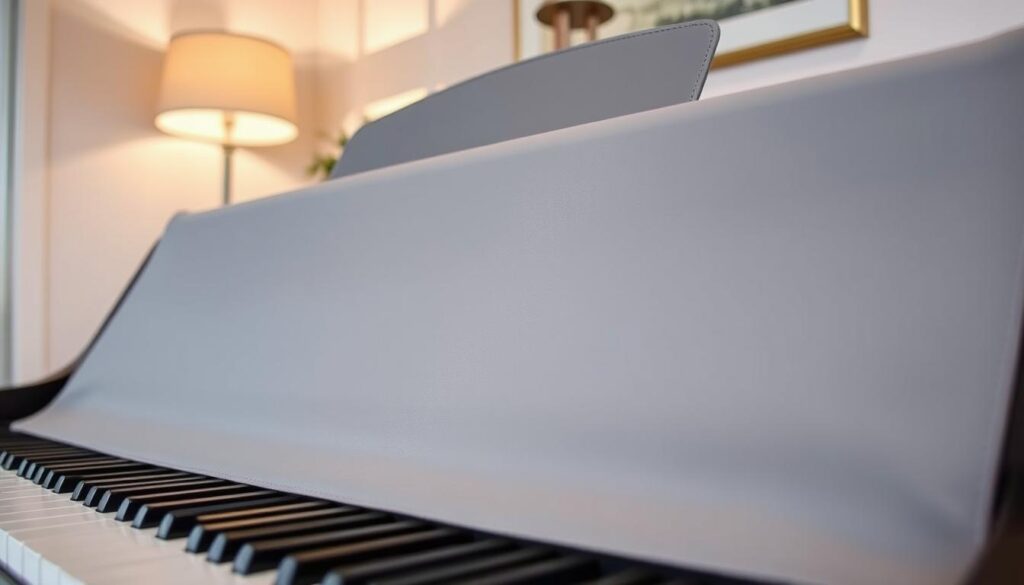
A dust cover is a simple solution. It’s not for show; it’s a practical way to protect your piano. Cover it when you’re done playing. This habit is key to keeping your piano in good shape.
Climate also plays a role. Extreme temperatures and humidity can damage your piano’s electronics. High humidity can cause corrosion, while low humidity can make plastics crack.
Keep your piano in a stable place. Avoid areas with direct sunlight, air conditioning vents, and radiators. These can harm your piano’s finish and electronics.
If you live in a humid or dry area, consider using a humidifier or dehumidifier. This helps keep your piano and your home comfortable.
Dealing with environmental threats requires a plan. Below is a list of common issues and how to protect your piano.
| Environmental Factor | Primary Risk | Recommended Protection | Maintenance Priority |
|---|---|---|---|
| Airborne Dust | Clogged vents, abrasive wear on surfaces | Fitted dust cover (use daily) | High |
| High Humidity (>60% RH) | Internal corrosion, mold, sticky keys | Room dehumidifier; avoid basements | Medium-High |
| Low Humidity ( | Static electricity, brittle plastics | Room humidifier; hygrometer to monitor | Medium |
| Direct Sunlight | Faded finish, overheated electronics | Relocate instrument; use blinds/curtains | High |
| Proximity to Vents | Temperature swings, forced air carries dust | Maintain 3-5 foot buffer zone | Medium-High |
The best defense is often simple. Keep your piano in a good spot and follow a few easy steps. Your piano’s electronics are strong, but they like a clean, stable home.
This part of piano maintenance is about reducing risks. You can control things like the cover, location, and climate. Enjoy your music, knowing you’ve taken good care of your piano.
Cable and Connection Care
Your digital piano’s cables are like its nervous system. We don’t want them to fail during a performance. Keeping them clean is key to your music’s flow.
The power supply is vital. Using the wrong adapter can harm your piano. The adapter is made for your piano’s specific needs.
Using the wrong adapter is like feeding a racehorse fast food. It can cause annoying sounds or even damage the piano. Always use clean, consistent power for your digital piano maintenance.
Connecting cables the wrong way can damage them. Pulling the cable by the cord, not the plug, is bad. This can cause problems with the connections.
Always hold the plug and insert it carefully. Move it straight in and out without twisting or pulling. This keeps the connections good.
Check your cables regularly. Look for any damage or loose connections. This helps prevent big problems during performances.
A loose connection is more than a technical issue. It’s a sign of a bigger problem. Taking care of your cables shows you understand your piano as a whole system.
| Cable Type | Common Issue | Preventive Action | Warning Sign |
|---|---|---|---|
| Power Cable | Wrong adapter use; wall wart strain | Use only OEM adapter; secure transformer off floor | Intermittent power; unusual transformer heat |
| Audio Output (L/R) | Oxidized connectors; impedance mismatch | Cap unused ports; match cable to output type | Static crackle; one channel dropping out |
| USB/MIDI Data | Bent pins; driver conflicts | Label cables; install latest drivers | Software not recognizing device; glitchy data |
| Sustain/ Pedal | Switch failure; polarity confusion | Unplug when moving piano; note polarity setting | Pedal stuck “on”; no sustain effect |
Each cable type has its own needs. Power cables need clean power. Audio cables need clear signals. Data cables need to work well. Pedal cables just need to work.
Keeping cables organized is important. It makes them last longer and easier to check. Use soft ties and avoid sharp bends.
This way of caring for your piano’s cables is key. It ensures your piano works well. You’ll feel confident playing, knowing your piano won’t let you down.
Software Updates and Management
The most overlooked part of modern piano care is not with a cloth, but with a USB cable. We’ve covered the physical aspects like dust and spills. Now, we move to the digital world. Your piano has an operating system, just like your phone.
Ignoring updates is like not getting the latest version of a favorite book. These updates can improve your piano’s sound and feel. They might make it sound better or feel more responsive.
- Visit the Source: Go to your manufacturer’s official website. Don’t use third-party sites.
- Find Your Model: Find the right firmware for your piano. Getting this wrong is like using the wrong oil.
- Download & Transfer: Download the update to a computer, then put it on a USB drive.
- Install with Care: Turn off your piano, insert the USB, and follow the on-screen instructions carefully. No distractions.
By updating your piano, you’re taking care of it in a new way. You’re not just owning it; you’re caring for it. Your piano can evolve, unlike a physical instrument.
Think of it as essential care for your piano in today’s world. Set reminders to check for updates every few months. This small effort can make your piano better over time.
Ignoring updates can harm your digital piano. A small bug could have been fixed long ago. Don’t overlook this digital care. It’s part of taking good care of your piano, blending physical and digital to keep your music perfect.
Troubleshooting Common Issues
Fixing a digital piano isn’t about panicking. It’s about using your detective skills. When a key sticks or sound gets distorted, it’s time to act. You become a detective instead of a musician.
Start by looking at what you’ve done recently. A sticky key might not need expensive fixes. Maybe you didn’t clean it well enough. Also, think about your environment. Too much moisture can swell wood, while too little can cause static.
For keys that won’t work, try contact cleaner. It’s not just for dusting. It’s a special cleaner that works on electrical contacts without harming them. Use it carefully, like a sniper.
Sound problems are another mystery. If one channel is silent, check your cables. Are they organized? Is the sound fuzzy or loud?
It’s possible you’ve been playing the speakers too loud. Digital pianos have limits. Blown speakers can be expensive lessons in sound.
Other issues might include settings that won’t save. Before you think it’s haunted, try a simple fix. Unplug the piano for a minute. This clears up temporary problems.
Be methodical in your troubleshooting. Don’t just guess. Follow these steps:
- Identify the Symptom Precisely: Is it one key or an octave? Is the sound crackling or completely absent?
- Check the Obvious: Is it plugged in? Are volume knobs up? Is the correct input selected?
- Isolate the Variable: Does it happen with headphones? If yes, the issue is likely internal. If no, suspect the speakers or external connections.
- Consult the Manual: Yes, really. That PDF you downloaded holds manufacturer-specific diagnostics.
This way, you become a problem solver instead of just a frustrated owner. Regular cleaning digital piano surfaces and maintenance can prevent big problems. This makes fixing issues rare.
Warranty Coverage Understanding
Your careful piano maintenance leads to the final step: the contract. Think of your warranty as a shield, but one made of fine print. It’s where careful analysis meets legal reality.
Most warranties, like those from Roland or Yamaha, cover defects in materials and workmanship. They don’t cover damage from spills or moves. The big trap is unauthorized repairs. Source 1 advises to check with the manufacturer before fixing it yourself. This is not just smart—it’s also a money-saving move.
Knowing your warranty’s limits is key to true piano maintenance. Read the contract carefully. Find out how long it lasts, like Williams Pianos’ one-year warranty or Kayserburg’s ten-year limited warranty. Understand what’s not covered, like normal wear and tear or environmental damage. Learn how to make a claim. This knowledge helps you know when to stop and when to call a professional.
For a detailed look at what certifications and warranty clauses mean, check out this comprehensive guide to digital piano warranties. It shows you’re a sophisticated owner. You care not just for the piano but also for the agreement that protects it.