Many piano students first encounter the sustain pedal as a simple tool that “makes the notes last longer.” While that basic idea is correct, professional pianists use pedaling with far greater precision. The sustain pedal is not only about holding sound—it is a powerful tool for shaping resonance, blending harmonies, and enhancing musical expression.
Advanced pedaling allows pianists to create depth, color, and smooth transitions between harmonies. In many performances, the audience may not consciously notice the pedal, but its influence on the sound is significant.
Understanding how professionals use pedaling can transform a performance from mechanically correct to musically expressive.
Understanding The Three Piano Pedals
Most modern pianos include three pedals, each designed to modify the instrument’s sound in different ways.
| Pedal | Name | Function |
|---|---|---|
| Right Pedal | Sustain Pedal | Allows notes to continue ringing after keys are released |
| Left Pedal | Soft Pedal (Una Corda) | Reduces volume and alters tone color |
| Middle Pedal | Sostenuto | Sustains selected notes while others remain unaffected |
Among these, the sustain pedal is used most frequently, especially in classical and contemporary piano music.
Professional pianists develop precise control over how long the sustain pedal is pressed and when it is released, shaping the clarity and resonance of the music.
The Role Of Pedaling In Musical Expression
Pedaling directly affects how harmonies blend together. Without proper pedal control, notes can either sound too dry or become muddy and indistinct.
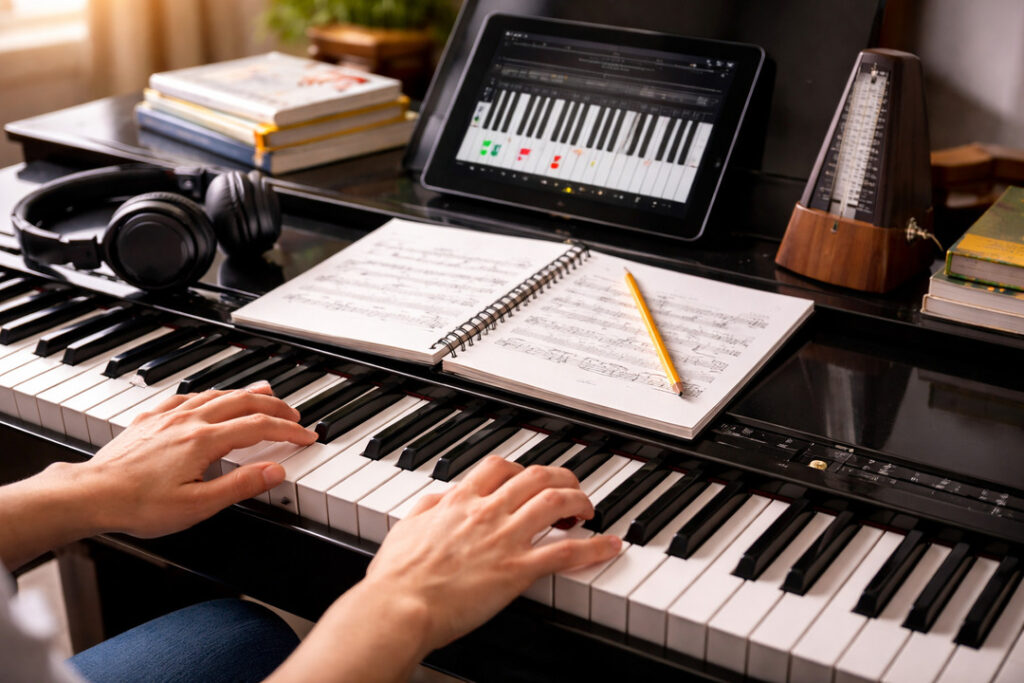
Experienced pianists use the pedal to:
- Connect harmonies smoothly
- Enhance resonance in lyrical passages
- Maintain clarity during complex chord changes
When used correctly, the pedal creates a singing quality in the piano tone, helping melodic lines stand out while supporting the harmonic background.
Pedaling is therefore not simply a technical tool but a key part of musical interpretation.
Half Pedaling: Controlling Resonance
One of the most important advanced pedaling techniques is half pedaling. Instead of pressing the sustain pedal fully down, the pianist presses it halfway to control how much resonance the strings produce.
| Pedal Depth | Resulting Sound |
|---|---|
| Full Press | Maximum resonance and sustain |
| Half Press | Controlled sustain with clearer harmony |
| Light Press | Minimal resonance, subtle blending |
Half pedaling allows performers to sustain notes while avoiding the excessive blending that can make passages unclear.
This technique is particularly useful in Romantic-era music, where sustained harmonies are essential but must remain transparent.
Pedal Timing And Harmonic Changes
Another advanced concept is pedal timing, which determines when the sustain pedal is lifted and reapplied during chord changes.
Many beginners mistakenly change the pedal at the same moment they press new notes. Professional pianists often delay the pedal change slightly so that the transition between harmonies sounds smoother.
This technique is sometimes called legato pedaling.
| Pedal Technique | Purpose |
|---|---|
| Simultaneous Pedal | Pedal pressed exactly with the notes |
| Delayed Pedal Change | Creates smoother harmonic transitions |
| Quick Pedal Release | Clears sound before a new harmony |
Careful timing ensures that each chord resonates fully without overlapping excessively.
The Soft Pedal And Tone Color
While the sustain pedal receives most of the attention, the soft pedal (una corda) also plays an important role in shaping piano sound.
When pressed, this pedal shifts the action of the piano slightly, causing the hammers to strike fewer strings. The result is a softer, more delicate tone.
Professional pianists often use the soft pedal in:
- Quiet lyrical passages
- Intimate musical moments
- Contrasting dynamic sections
The effect is not simply reduced volume but also a change in tonal color, giving the music a more intimate character.
Practicing Pedal Control Effectively
Pedaling requires careful listening and consistent practice. Beginners sometimes rely too heavily on the pedal, using it to hide uneven playing.
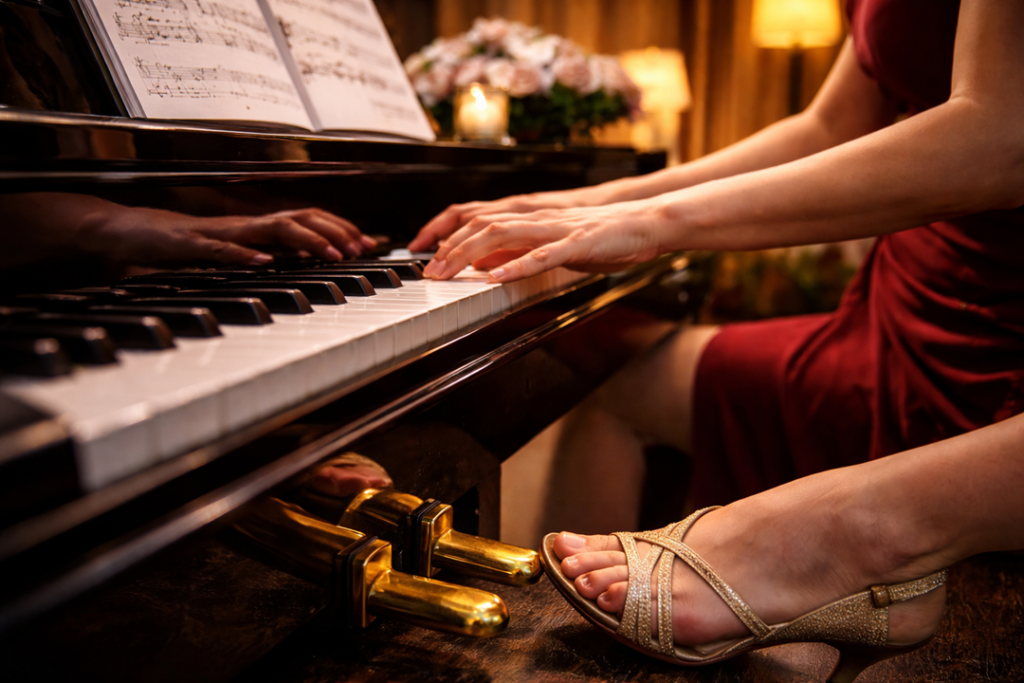
A more effective practice approach involves first playing passages without any pedal at all. This ensures that the finger technique produces clean note transitions.
Once the passage sounds clear, the pedal can be added gradually to enhance resonance rather than compensate for technical issues.
Players who are still developing finger control may also benefit from practicing on instruments with realistic key resistance. Our guide on weighted vs semi weighted keys explains how key action influences dynamic control and expressive playing.
Pedaling In Different Musical Styles
Pedal usage varies depending on the musical style being performed.
| Style | Typical Pedal Use |
|---|---|
| Baroque | Very limited or no sustain pedal |
| Classical | Light, controlled pedaling |
| Romantic | Frequent pedal for expressive resonance |
| Modern / Film Music | Wide dynamic pedaling for atmosphere |
Understanding stylistic differences helps pianists interpret music more authentically.
Music scholars often emphasize the importance of pedaling in shaping piano sound. According to the Royal Conservatory of Music’s overview of piano technique, advanced pedal control is essential for achieving professional-level tone and phrasing.
Developing A Professional Sound
Pedaling is one of the most subtle yet powerful aspects of piano performance. When used with precision, it enhances harmony, supports melodic phrasing, and adds emotional depth to the music.
Professional pianists spend years refining pedal control because even small adjustments can dramatically affect the sound.
For developing players, the key is patience. By practicing careful pedal timing and listening closely to how resonance changes, pianists gradually learn to shape the piano’s sound with greater artistry.
In many ways, mastering pedaling transforms the instrument from a mechanical keyboard into a fully expressive musical voice.