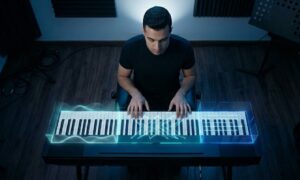
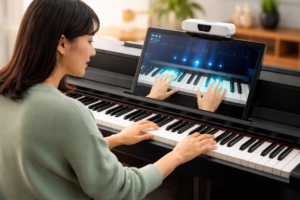
Learning the piano has traditionally relied on a combination of weekly lessons, sheet music, and hours of individual practice. While this method remains highly effective, new technology is transforming how musicians approach skill development. In 2026, AI-powered piano learning apps are becoming powerful practice partners, offering instant feedback, personalized exercises, and detailed progress tracking.
These tools do not replace human teachers, but they dramatically expand the resources available to students. By combining artificial intelligence with modern digital instruments, musicians now have access to a continuous learning environment that extends beyond the traditional lesson.
As the technology evolves, AI piano teachers are changing how beginners practice and how experienced players refine their technique.
How AI Piano Learning Apps Work
Modern piano learning apps rely on several technologies working together. Most systems connect directly to a digital piano or keyboard through MIDI or USB. This connection allows the software to detect exactly which notes the student plays.
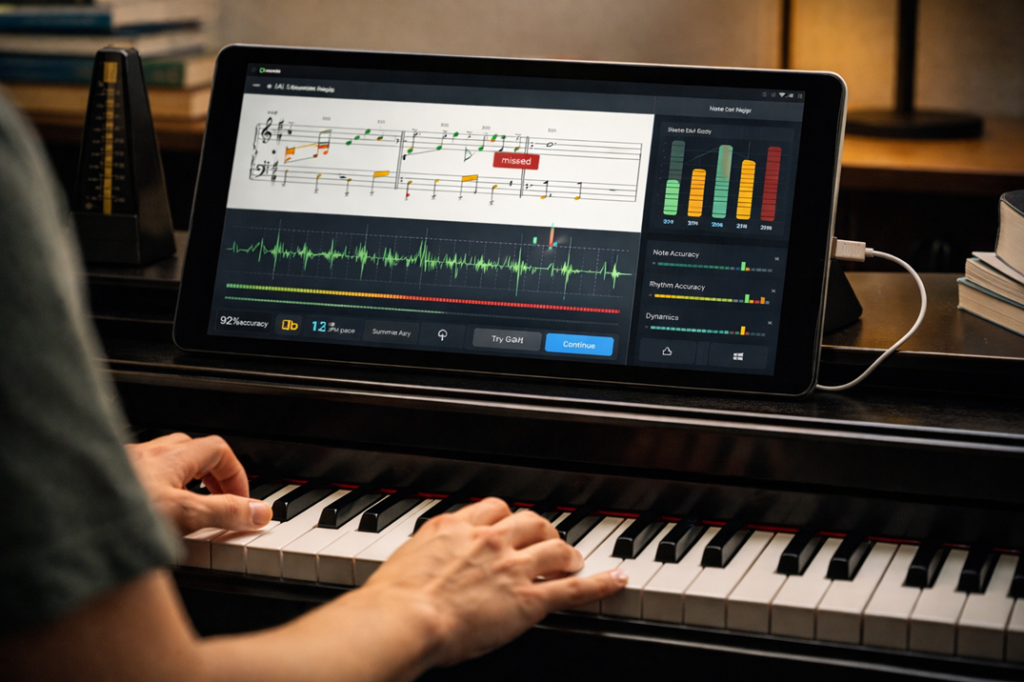
Artificial intelligence analyzes this input and compares it to the expected musical score. The system can then evaluate multiple aspects of performance.
| Feature | What The AI Measures |
|---|---|
| Note Accuracy | Correct or incorrect pitches |
| Rhythm Timing | Alignment with the intended tempo |
| Dynamics | Strength or softness of key presses |
| Practice Patterns | Repetition and improvement trends |
Instead of waiting until the next lesson to receive feedback, students receive instant analysis after each attempt, helping them correct mistakes quickly.
Real-Time Feedback And Error Detection
One of the most powerful advantages of AI practice tools is real-time feedback. When a student plays a passage incorrectly, the system can immediately highlight the error and suggest a correction.
This process dramatically speeds up learning. Traditional practice often requires repeating a passage several times before identifying a mistake. AI systems can identify those issues instantly.
For example, if a player consistently rushes a difficult measure, the app may automatically slow the tempo or isolate the problematic section.
This type of feedback encourages deliberate practice, which research shows is one of the most effective ways to develop musical skill.
Personalized Practice Plans
Artificial intelligence excels at analyzing patterns. When applied to music education, this ability allows apps to create personalized practice routines based on a student’s progress.
Instead of practicing the same exercises repeatedly, AI systems adapt the difficulty level according to performance.
| Practice Feature | Learning Benefit |
|---|---|
| Adaptive Exercises | Adjust difficulty automatically |
| Skill Tracking | Monitor improvement over time |
| Targeted Drills | Focus on weak technical areas |
| Progress Reports | Provide structured learning goals |
This personalized approach helps students stay motivated while ensuring that practice time remains productive.
Expanding Access To Music Education
AI piano apps are also helping make music education more accessible. Not every student has regular access to a professional instructor, particularly in remote areas.
Digital learning platforms allow students to practice with structured guidance even when a teacher is not present. For many beginners, these tools provide an affordable entry point into learning an instrument.
The growing popularity of digital learning is supported by advances in educational technology. The MIT Technology Review’s coverage of artificial intelligence in education highlights how adaptive learning systems are reshaping skill development across many disciplines.
In music, this means students can receive guided feedback anytime they practice.
Combining AI Tools With Traditional Lessons
Despite their advantages, AI systems work best when combined with traditional instruction rather than replacing it.
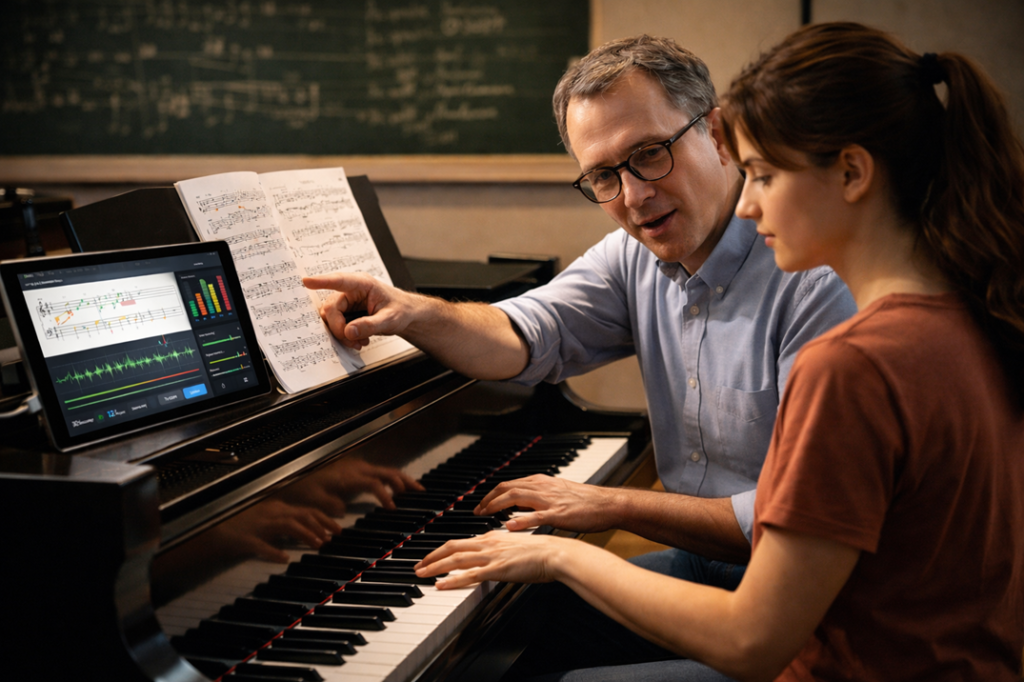
Human teachers provide musical interpretation, emotional nuance, and stylistic guidance that software cannot fully replicate. They also help students develop broader musicianship skills such as phrasing and musical storytelling.
AI tools are most effective when used between lessons. They reinforce techniques taught by instructors and help students maintain consistent practice habits.
Students working on technical control, for example, may use digital tools alongside foundational piano hand coordination exercises to improve finger independence and accuracy.
This combination of human instruction and smart technology creates a balanced learning environment.
The Role Of Digital Pianos In AI Learning
Most AI piano apps require a digital piano or keyboard capable of transmitting performance data. These instruments allow the software to detect note timing, velocity, and articulation.
Modern digital pianos also include built-in connectivity options such as Bluetooth MIDI, making them compatible with learning apps on tablets and smartphones.
Because of this integration, digital instruments are becoming central to technology-driven music education.
As digital piano technology continues to improve, the relationship between instruments and learning software will likely become even more seamless.
What The Future Of Piano Practice May Look Like
The development of AI music learning tools is still in its early stages, but the potential is enormous. Future systems may analyze posture, hand position, and finger motion through cameras or sensors.
This could allow software to provide feedback not only on what notes are played but also how they are physically performed.
Other innovations may include collaborative online practice environments where students receive feedback from both AI systems and remote instructors simultaneously.
As these technologies evolve, piano practice will likely become more interactive, data-driven, and personalized than ever before.
A New Era Of Practice And Musical Development
AI piano teachers represent an exciting step forward in music education. By offering real-time feedback, adaptive exercises, and detailed progress tracking, these tools help musicians practice more efficiently.
However, the most effective learning still comes from combining technology with traditional musical mentorship. Teachers provide artistic insight and emotional interpretation that software cannot replicate.
When used thoughtfully, AI learning tools become a powerful complement to traditional lessons, helping students develop stronger practice habits and deeper musical understanding.
In 2026, piano education is entering a new era where human creativity and intelligent technology work together to support musical growth.