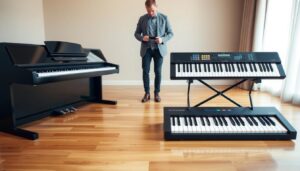
The way people learn piano is changing quickly—and one of the most intriguing developments is the rise of smart pianos with hand tracking technology. These systems don’t just listen to what you play; they watch how you play it, offering a level of feedback that was once only possible in a one-on-one lesson.
For beginners, this opens up a more guided and structured learning experience. For developing players, it introduces a new layer of technical awareness and correction that can dramatically improve efficiency.
But how useful is this technology in real practice? And can it actually replace or enhance traditional technique building?
What Hand Tracking Technology Actually Does
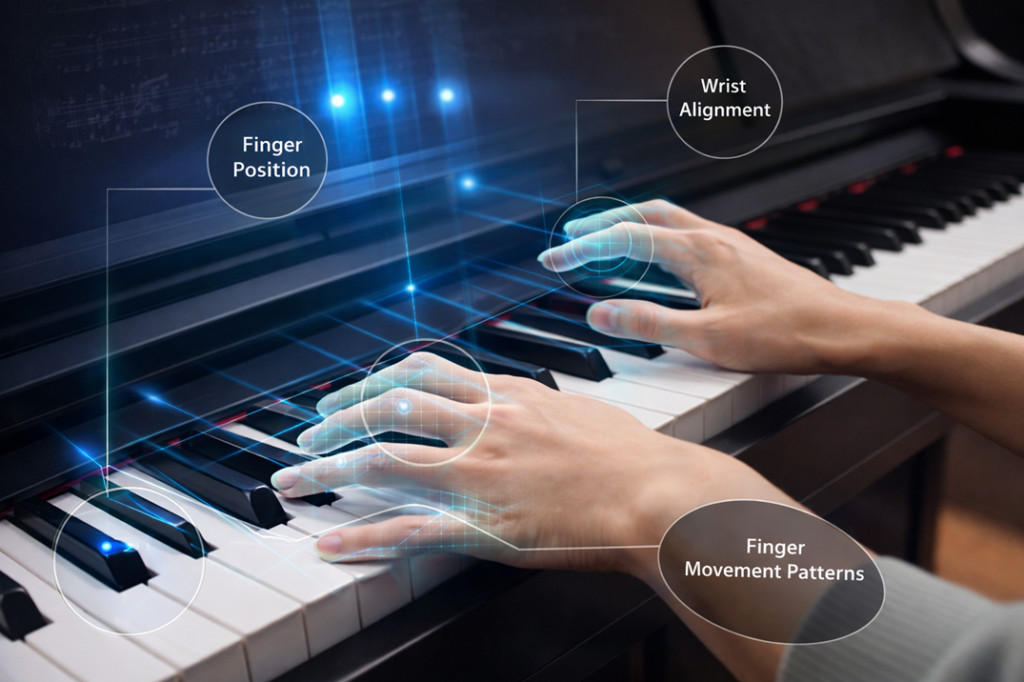
At its core, hand tracking uses cameras or motion sensors to monitor:
- finger placement
- hand position
- wrist alignment
- movement patterns across the keyboard
Unlike traditional digital learning tools that only analyze notes and timing, this technology evaluates the physical mechanics behind your playing.
That distinction matters. Two players can hit the same notes, but one might be using inefficient or even harmful technique. Hand tracking identifies those differences in real time.
Why Technique Feedback Has Always Been Limited
Historically, technique correction required a teacher physically observing you. Even the best apps and digital platforms struggled with this limitation.
Here’s how traditional tools compare:
| Learning Method | Detects Notes | Detects Rhythm | Detects Hand Position |
|---|---|---|---|
| Sheet Music | ❌ | ❌ | ❌ |
| Basic Apps | ✅ | ✅ | ❌ |
| Smart Pianos With Hand Tracking | ✅ | ✅ | ✅ |
This is why many self-taught players plateau early. Without guidance, small technical flaws compound over time, affecting speed, accuracy, and even comfort.
How Hand Tracking Improves Practice Efficiency
One of the biggest benefits of this technology is how it shortens the feedback loop.
Instead of practicing incorrectly for days—or weeks—you get immediate corrections such as:
- lifting fingers too high
- collapsing knuckles
- improper wrist angle
- uneven hand balance
This allows you to focus on intentional repetition, which is the foundation of effective practice.
If you’ve ever worked on refining coordination, you already know how important awareness is. In fact, many of these systems pair naturally with structured exercises like this hand coordination practice routine, reinforcing both timing and physical control at the same time.
The Role Of Visual Learning In Piano Technique
Another major shift is the introduction of visual feedback.
Instead of relying purely on verbal instruction or written markings, players can now see:
- where their hands deviate from ideal form
- how efficient movements look compared to their own
- real-time overlays or guides showing corrections
This taps into a different learning pathway. For many beginners, visual correction is faster to process than abstract instruction, especially when learning complex movements.
It’s similar to how athletes review footage to improve performance—except now it’s happening instantly.
Where Smart Pianos Still Fall Short
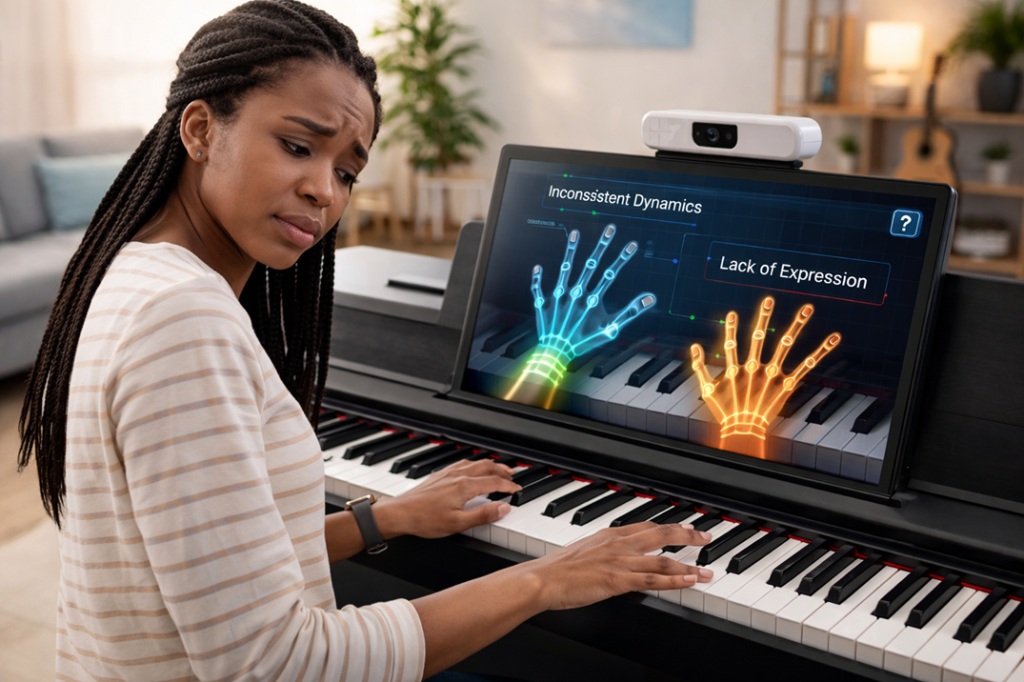
Despite the innovation, hand tracking isn’t a complete replacement for traditional teaching.
There are still limitations:
- It can struggle with nuance, such as musical phrasing or tone production
- Not all systems accurately interpret advanced techniques
- Over-reliance may reduce independent listening skills
Most importantly, technology can guide movement, but it doesn’t fully teach musical expression.
This is why the best approach is hybrid: using smart tools for precision while continuing to develop musicality through listening and interpretation.
Current Brands And Technology Trends
Several companies are already exploring this space, integrating AI and motion capture into digital pianos and learning platforms.
Some systems combine:
- camera-based hand tracking
- LED-guided keys
- app-based lesson ecosystems
- AI-driven feedback
You can explore broader trends in piano technology through platforms like digital piano innovations overview, where manufacturers are increasingly blending hardware with intelligent software.
What’s clear is that the direction is shifting toward interactive, responsive instruments rather than static keyboards.
Who Benefits Most From Hand Tracking Pianos
While this technology sounds advanced, it’s not just for experienced players.
It’s particularly useful for:
Beginners
They gain structured guidance and avoid building bad habits early.
Intermediate Players
They can refine efficiency, especially in faster passages and coordination-heavy pieces.
Self-Learners
They finally get a form of “visual supervision” without needing constant instruction.
Interestingly, advanced players may benefit less directly—but still use it as a diagnostic tool for refining specific movements.
Is This The Future Of Piano Learning?
Smart pianos with hand tracking represent a meaningful step forward—not because they replace traditional learning, but because they fill a long-standing gap in feedback.
For decades, digital tools could tell you what you played wrong. Now, they’re beginning to explain why.
That shift has real implications. It makes practice more efficient, reduces frustration, and helps players develop cleaner, more sustainable technique from the beginning.
As the technology improves, we’re likely to see even deeper integration between physical movement analysis and musical interpretation.
For now, though, the biggest advantage is simple:
you’re no longer practicing in the dark.