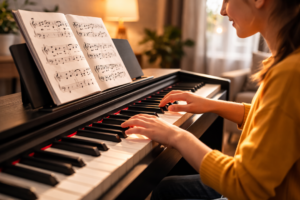
For years, one of the biggest challenges in learning piano hasn’t been difficulty—it’s been consistency. Even motivated beginners often struggle to maintain regular practice.
Now, a new generation of piano learning apps is changing that dynamic by introducing gamification—a system of rewards, progress tracking, and interactive challenges that turns practice into something far more engaging.
The result? Practice sessions that feel less like obligation and more like progression.
What Gamified Piano Learning Actually Means
Gamification doesn’t mean turning piano into a video game—it means applying game design principles to learning.
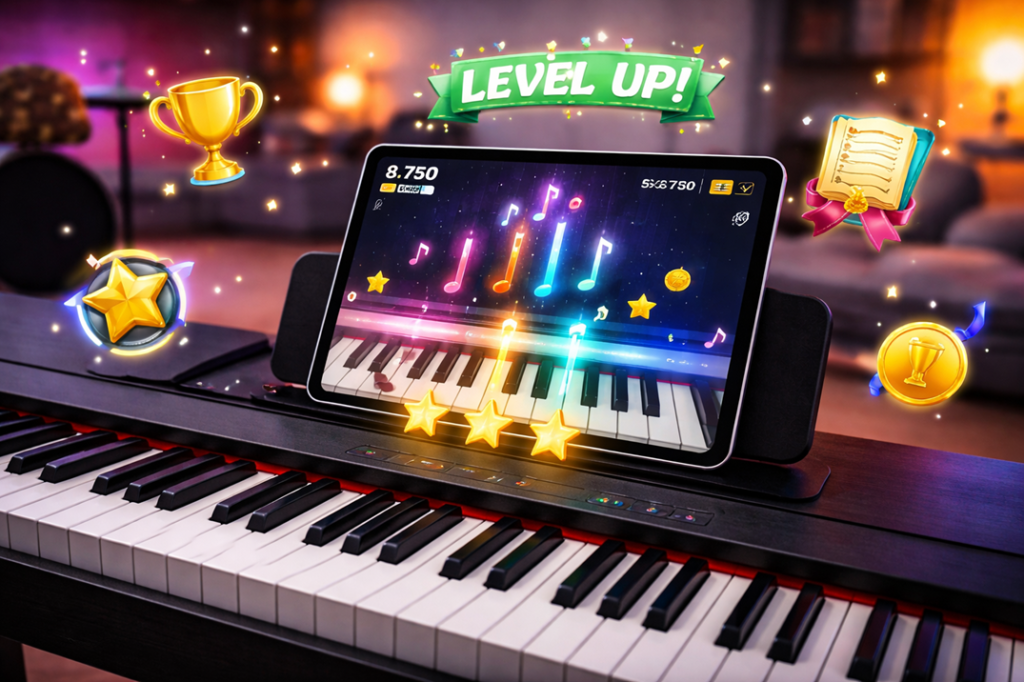
These apps use systems like:
- progress levels
- achievement badges
- streak tracking
- real-time scoring
- interactive challenges
Instead of simply telling you what to practice, they create a feedback-driven loop where each session has a clear objective and visible outcome.
This structure is particularly effective for beginners who need guidance and momentum early on.
Why Traditional Practice Often Fails
Most players don’t quit piano because it’s too hard—they quit because progress feels unclear.
Traditional practice methods rely heavily on:
- self-discipline
- delayed feedback
- abstract goals
Without clear markers of improvement, it’s easy to lose motivation.
Here’s how the difference plays out:
| Practice Style | Feedback Speed | Motivation Structure | Engagement Level |
|---|---|---|---|
| Traditional Practice | Slow | Self-driven | Variable |
| Gamified Apps | Immediate | System-driven | High |
Gamified systems shorten the gap between effort and reward, making progress visible and measurable.
The Psychology Behind Addictive Practice
The effectiveness of gamified learning comes from basic behavioral psychology.
These apps leverage:
- instant feedback, which reinforces correct actions
- small wins, which build momentum
- clear progression paths, which reduce uncertainty
- reward systems, which encourage repetition
This creates a loop where players are naturally encouraged to continue practicing—not because they have to, but because they want to reach the next milestone.
For beginners especially, this can transform piano from a long-term goal into a series of achievable steps.
Real-Time Feedback And Skill Development
One of the most valuable aspects of modern apps is their ability to analyze performance in real time.
They can detect:
- missed notes
- timing inconsistencies
- rhythm accuracy
- basic hand coordination
While this doesn’t fully replace a teacher, it does provide a level of guidance that was previously unavailable outside of lessons.
When combined with structured technical work—like improving movement efficiency through piano arpeggio technique—these tools become even more powerful, reinforcing both accuracy and control.
Where Gamification Helps Most
Not every aspect of piano learning benefits equally from gamification. Its strengths are very specific.
Gamified learning works best for:
Early Skill Development
Beginners build familiarity with the keyboard and basic patterns quickly.
Consistency Building
Daily streaks and rewards encourage regular practice habits.
Rhythm And Timing
Interactive scoring helps players internalize timing more effectively.
However, it becomes less effective for:
- advanced musical interpretation
- tone shaping
- expressive phrasing
These still require deeper listening and musical awareness beyond what most apps currently provide.
The Technology Driving This Shift
Recent developments in music tech have accelerated the effectiveness of gamified learning.
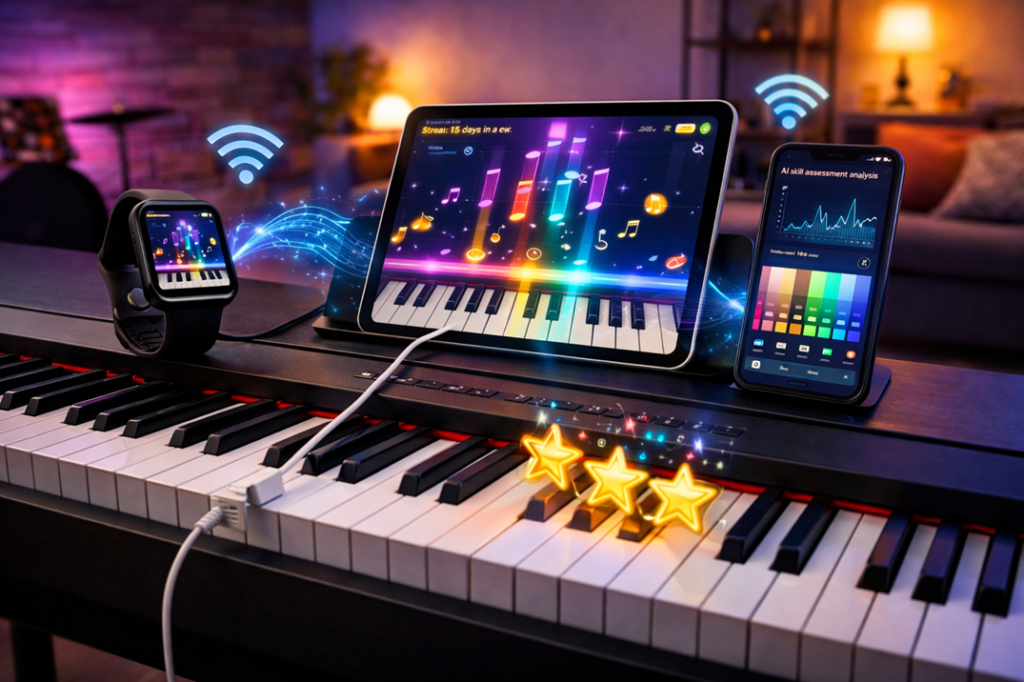
Many apps now integrate:
- MIDI or audio recognition
- adaptive difficulty systems
- AI-based performance analysis
- cross-device syncing
Some even connect directly with digital pianos, creating a more immersive learning environment.
You can explore how these tools are evolving in the broader music tech space through piano learning app trends, where developers are increasingly focusing on personalization and engagement.
The Risk Of Over-Reliance
While gamification can be powerful, it’s not without limitations.
There’s a risk that players become too focused on:
- scores instead of sound
- speed instead of control
- completion instead of understanding
In other words, progress in the app doesn’t always equal progress in musicianship.
That’s why it’s important to balance app-based learning with:
- slow, deliberate practice
- listening-focused exercises
- occasional unstructured playing
The goal isn’t just to “win” the system—it’s to develop real musical skill.
Are Piano Apps Replacing Traditional Learning?
Not entirely—but they are reshaping it.
Gamified apps are becoming a powerful entry point into piano learning, especially for:
- self-taught players
- busy adults
- younger learners
They reduce friction, increase engagement, and provide structure where none existed before.
However, the most effective approach is still a hybrid model—using apps for consistency and structure, while developing deeper skills through traditional methods.
A New Kind Of Practice Experience
Gamified piano learning represents a shift in how we approach practice itself.
Instead of relying purely on discipline, it introduces:
- clarity
- structure
- immediate feedback
- built-in motivation
For many players, that’s the missing piece.
Because ultimately, the hardest part of learning piano isn’t understanding what to do—it’s doing it consistently.
And if practice becomes something you actually look forward to, everything else starts to fall into place.