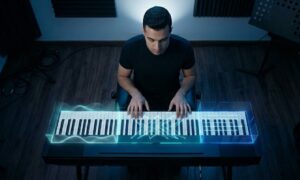
For years, digital pianos were seen as a compromise—convenient, versatile, but never quite matching the depth and responsiveness of an acoustic instrument.
That gap is shrinking rapidly.
The latest generation of digital pianos released in 2026 is redefining expectations. With advances in key action, sound modeling, and speaker design, these instruments are no longer just alternatives—they’re becoming serious substitutes for many players.
The question is no longer “Can a digital piano replace an acoustic?”
It’s “How close have they actually come?”
The Evolution Of Digital Piano Realism
Early digital pianos focused primarily on convenience: portability, volume control, and affordability. Realism was secondary.
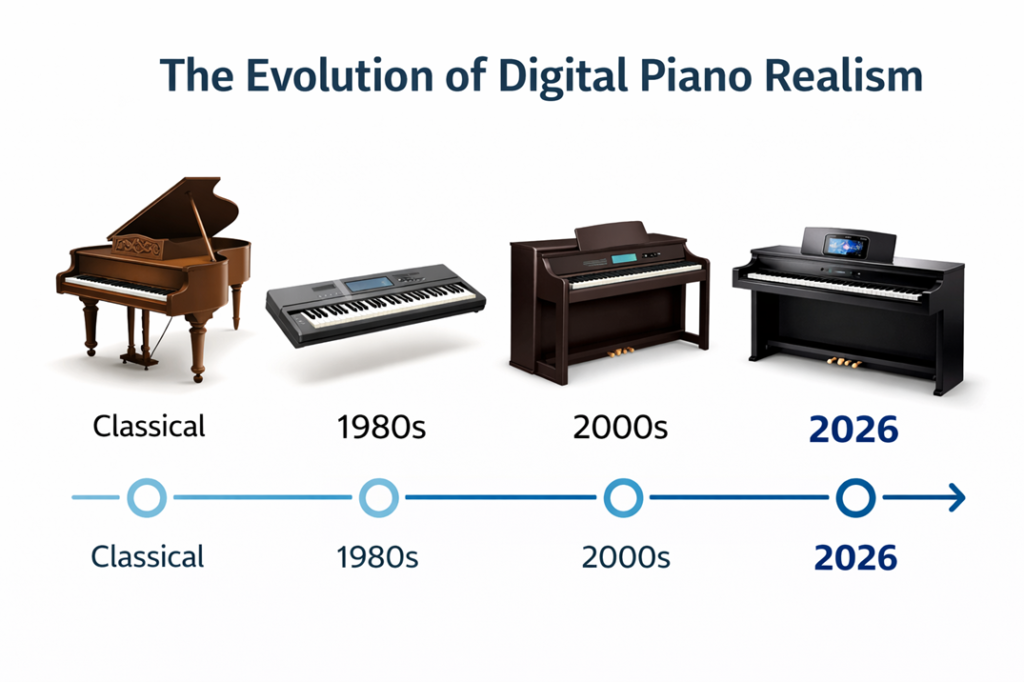
Today, manufacturers are prioritizing authentic playing experience, aiming to replicate not just the sound of an acoustic piano, but the entire physical interaction.
This includes:
- the resistance of the keys
- the subtle variations between registers
- the dynamic response to touch
The shift reflects a deeper understanding of what pianists actually need: consistency between practice and performance environments.
Advanced Key Action: The Foundation Of Real Feel
The most noticeable improvement in 2026 models is key action.
Modern digital pianos now feature:
- graded hammer action that mimics acoustic weight differences
- escapement simulation for subtle resistance during key presses
- improved pivot lengths for more natural leverage
These elements combine to create a playing experience that feels significantly closer to a real acoustic instrument.
The difference becomes especially clear when working on expressive control. Techniques like dynamic shaping and articulation rely heavily on touch sensitivity, which is now far more refined than in previous generations.
Sound Engines That Go Beyond Sampling
Another major leap is happening inside the instrument: the sound engine.
Older digital pianos relied on static samples—recordings of real pianos played at different volumes. While effective, this approach had limitations.
In 2026, many instruments are using modeling technology, which recreates sound in real time based on how the keys are played.
This allows for:
- smoother dynamic transitions
- more natural resonance
- greater tonal variation
Instead of replaying a fixed sound, the piano responds dynamically, much like an acoustic instrument would.
Speaker Systems That Simulate Acoustic Projection
One of the most overlooked aspects of realism is how sound is projected into a room.
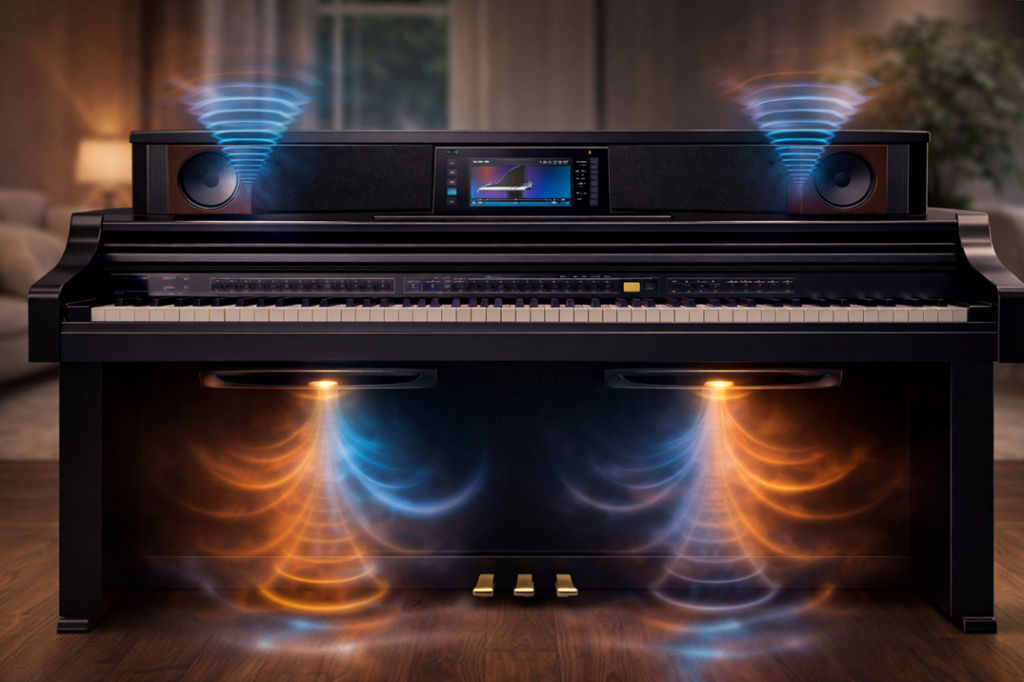
Acoustic pianos produce sound through a soundboard, creating a spatial, immersive experience. Digital pianos historically struggled to replicate this.
Newer models now include:
- multi-speaker configurations positioned around the cabinet
- upward and downward sound projection
- resonance simulation for room interaction
These improvements create a more convincing sense of depth, making the instrument feel less “contained” and more physically present in the space.
How Digital And Acoustic Pianos Compare Today
The gap hasn’t disappeared entirely—but it has narrowed significantly.
| Feature | Acoustic Piano | 2026 Digital Piano |
|---|---|---|
| Key Action | Fully mechanical | Highly realistic simulation |
| Sound Production | Physical strings | Advanced modeling/sampling |
| Maintenance | High | Minimal |
| Volume Control | None | Full control |
| Portability | Limited | High |
For many players, the practical advantages of digital pianos now outweigh the remaining differences—especially when realism is no longer a major compromise.
Who Benefits Most From These Improvements
The impact of these advancements depends on the player’s goals.
Beginners benefit from starting on an instrument that encourages proper technique without the cost and maintenance of an acoustic.
Intermediate players gain consistency, especially when transitioning between home practice and performance settings.
Advanced players may still prefer acoustic instruments for nuanced expression, but even they are increasingly using digital pianos for practice and recording.
The Role Of Consistency In Technique Development
One of the biggest advantages of improved realism is technical consistency.
When a digital piano closely mirrors an acoustic, players can:
- develop accurate finger strength
- refine dynamic control
- practice expressive techniques with confidence
This is particularly important for skills that depend on touch and responsiveness. For example, working through expressive control in pieces like advanced pedaling techniques becomes far more effective when the instrument responds naturally.
Consistency between instruments reduces the need to “adjust” when switching to an acoustic piano.
The Influence Of Industry Innovation
The push toward realism is being driven by competition among major manufacturers.
Recent releases showcased at industry events highlight a clear trend: integration of hardware and software innovation.
Manufacturers are combining:
- mechanical engineering (key action design)
- digital signal processing (sound modeling)
- acoustic research (resonance simulation)
You can see how these innovations are shaping the market through latest digital piano releases, where new models emphasize realism as a core feature rather than a bonus.
Are Digital Pianos Finally Replacing Acoustic Instruments?
Not entirely—but the conversation is changing.
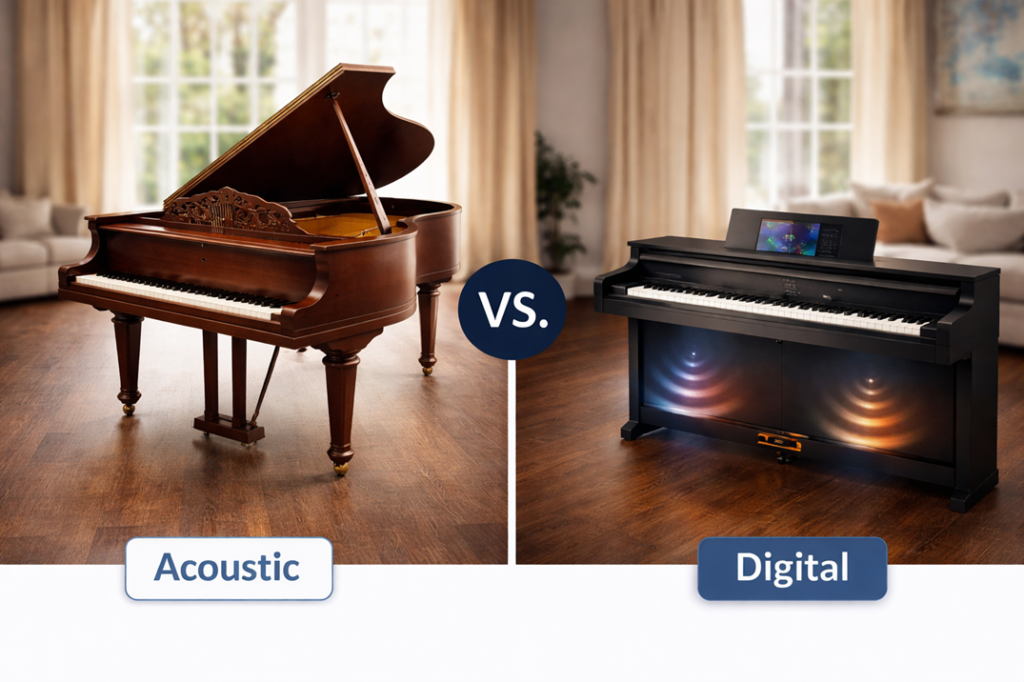
Acoustic pianos still offer unmatched authenticity in certain areas, particularly in complex resonance and tonal depth.
However, digital pianos are now:
- more accessible
- more versatile
- increasingly realistic
For many players, especially those learning or practicing regularly, they are becoming the more practical choice.
A New Standard For Modern Pianists
The progress made in 2026 digital pianos marks a turning point.
What was once considered a compromise is now a viable long-term instrument for serious learning and performance.
For modern pianists, this means more flexibility without sacrificing quality. You can practice quietly, record easily, and still develop the technique needed for acoustic performance.
The gap hasn’t completely disappeared—but it’s closer than it’s ever been.