Let’s get real about music, shall we? Forget the myths about “magical touch” or “emotional ghosts.”
The truth is simple and freeing. Your instrument changes sound based on how fast you press the keys. Pressing fast makes it loud. Pressing slow makes it soft.
It’s like politics. You can whisper or shout. Both get your point across, but in different ways.
This isn’t just for music experts. It’s basic physics. The speed at which you press keys changes the sound. Digital keyboards make this easier to grasp than acoustic ones.
So, forget chasing emotional highs. Learn the basics of beginner piano dynamics. It’s like studying film through lighting, not actor drama.
Symbols and Their Meaning
Think of dynamic markings as the composer’s secret love letters to performers. They’re not just instructions, but emotional blueprints. Most beginners treat F (forte) and P (piano) like volume knobs, without thinking about the emotional context. That’s like reading Shakespeare and only noticing the punctuation.
The truth is, dynamic symbols represent emotional states, not just volume levels. Forte isn’t just loud – it’s conviction, declaration, or sometimes anger. Piano isn’t just soft – it’s intimacy, secrecy, or vulnerability. The magic happens in the transitions between these states.
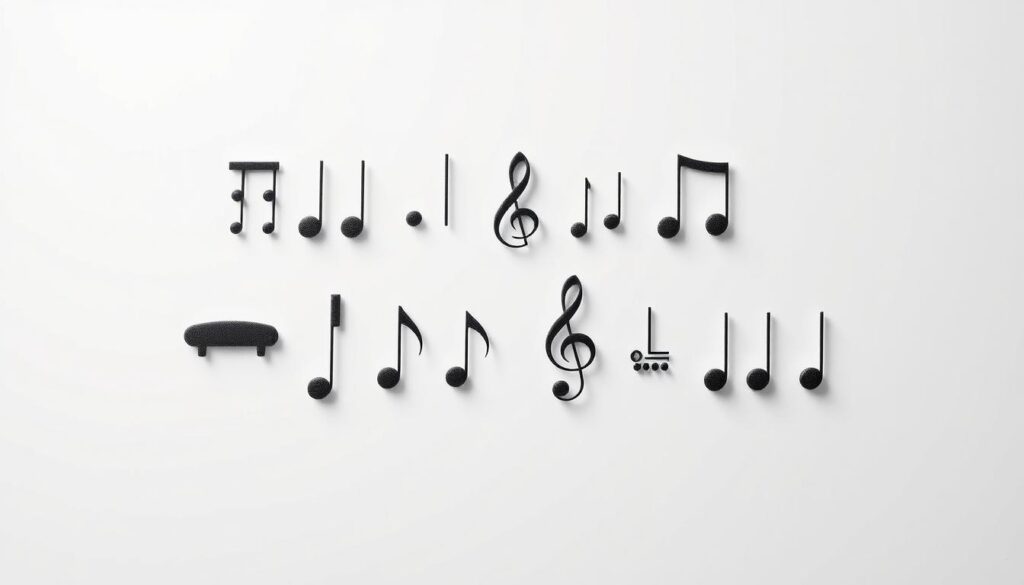
Those crescendo and decrescendo markings (the sideways V’s) aren’t just volume swells – they’re emotional journeys. A crescendo might represent growing excitement, building tension, or approaching revelation. A decrescendo could signify fading memory, retreating confidence, or peaceful resolution.
I’ve seen students treat these symbols like traffic signs, not emotional suggestions. The result? Musical driving that would make a DMV instructor weep. The secret lies in understanding that these markings are the composer’s attempt to translate emotion into notation.
Here’s how basic dynamic symbols translate into emotional language:
| Symbol | Literal Meaning | Emotional Interpretation | Common Context |
|---|---|---|---|
| pp (pianissimo) | Very soft | Whispered secret, intimate thought | Reflective passages, endings |
| p (piano) | Soft | Confidential disclosure, vulnerability | Personal moments, questions |
| mp (mezzo-piano) | Moderately soft | Gentle suggestion, hesitant idea | Transitional phrases |
| mf (mezzo-forte) | Moderately loud | Confident statement, normal conversation | Main themes, narratives |
| f (forte) | Loud | Emphatic statement, declaration | Climaxes, important points |
| ff (fortissimo) | Very loud | Overwhelming emotion, triumph | Peak moments, dramatic highlights |
The real artistry in expressive piano playing comes from treating these symbols as emotional suggestions. That crescendo might need to start earlier or later depending on the emotional arc. That forte might need more bite or more warmth depending on the character of the piece.
For a deeper dive into musical notation, check out this guide to music symbols that covers everything from dynamics to articulation.
Remember: dynamics are the emotional punctuation of music. They tell us not just what to play, but how to feel while playing. Mastering this emotional vocabulary separates mechanical players from truly expressive piano playing artists.
Practicing Soft vs. Loud
Let’s be honest – anyone can bang on keys or tiptoe across them. The real art lies in the strategic modulation between these extremes. Think of it as political rhetoric for your fingers: shouting gets attention, but nuance wins hearts.
I call my approach “emotional weightlifting” for beginner piano dynamics. You wouldn’t try to bench press 300 pounds on day one. Don’t just jump between forte and piano markings. Isolate dynamic shifts like you’re training specific muscle groups.
- Play the entire piece at mezzoforte first – establish your baseline
- Exaggerate every dynamic marking like a Shakespearean actor testing projection
- Add subtle swells and diminuendos where none are written
The contrast will feel ridiculous initially. That’s the point! You’re building your dynamic range through resistance training. As one expert notes, practicing softly reveals technical problems you’d never hear at full volume.
Remember: audiences won’t recall your individual notes. They’ll remember the emotional journey. And that journey is paved with deliberate dynamic choices that transform mechanical playing into musical storytelling.
Your beginner piano dynamics practice should feel like learning to argue persuasively. It’s not about being loudest or quietest – it’s about knowing when to deploy each weapon for maximum impact.
Bringing Emotion Into Early Pieces
Ever notice how a master chef can turn simple ingredients into something amazing? We’re doing the same with piano. It’s not just about the notes; it’s about adding emotional depth.
This method is called “emotional cross-training.” Before you start playing, imagine a scene. That C major scale isn’t just notes; it’s the sunrise over your first apartment. A basic chord progression is like the emotional journey of a story in eight measures.
Try this exercise: play your piece without any emotion first. Then, play it like you’re performing at Carnegie Hall after drinking lots of espresso.
This contrast shows something interesting. Technical skill actually opens up space for emotion, not blocks it. It’s like learning grammar before writing poetry. The rules help your expression shine.
“Before you play, take 15 seconds and visualize a scene that could relate to your music”
This technique works because it mimics the composer’s process. They felt something and wrote it down; you’re bringing that feeling back. It’s like emotional archaeology with music.
“Twinkle Twinkle Little Star” can become special with the right emotional touch. The magic happens when you mix technical skill with storytelling. Your hands do the work, so your heart can express itself.
The beautiful paradox? The most expressive piano playing often comes from musicians who aren’t feeling much during performance. They’ve built the emotion into their muscle memory through precise practice.
Try pairing your simple piece with a vivid memory or imagined scenario tomorrow. You might find that those beginner exercises hold more emotional depth than you thought.
Listening Suggestions
Think of listening to music as a detective job, not just fun. You’re not just hearing sounds – you’re understanding feelings. It’s like comparing speeches from different politicians.
Listen to Claudio Arrau and Glenn Gould play the same Bach piece. Arrau brings out deep feelings with slow music. Gould shows smartness with precise playing. Neither is better – they just speak music in different ways.
Your task is to listen to three versions of your practice piece. Make a “dynamic fingerprint” for each player. Note how they handle loud and soft parts, their use of silence, and their own rhythm.
Here’s your detective kit for beginner piano dynamics:
| Pianist | Dynamic Signature | Emotional Effect | What to Steal |
|---|---|---|---|
| Claudio Arrau | Gradual buildups, rich sustain | Profound depth | Layered emotional intensity |
| Glenn Gould | Precise articulation, clear contrasts | Intellectual clarity | Crisp dynamic definition |
| Martha Argerich | Passionate surges, dramatic pauses | Raw excitement | Emotional spontaneity |
| Vladimir Horowitz | Bold contrasts, theatrical flourishes | Dramatic impact | Dynamic showmanship |
YouTube is your lab. Look for your piece and see how different players change it. It’s amazing how two versions can feel so different.
Now, for the magic part: borrow like an artist. Mix Gould’s clarity with Arrau’s depth. Add your own feelings. That’s not copying – it’s mastering music’s language.
Your listening should feel like learning from masters. Each pianist teaches you about dynamics. Each performance shows a new emotional side.
Remember, you’re not just learning notes. You’re learning to speak through the piano. And every great speaker starts by listening.
Conclusion
Expressive piano playing is all about the audience, not you. You’re the conductor, guiding their feelings. Web source 2 says it right: you feel little, but they feel everything. Your role is to connect the music to their hearts.
Imagine yourself as a sound architect. Every note, every dynamic change, is a deliberate choice. It’s like a speech that feels spontaneous but is carefully planned. You create emotion with precise control. The secret? Technical skill can feel like freedom.
Web source 3 tells us: music has the power to move people. When you master this, you’ve become an emotional engineer. Now, it’s time to practice. Create sound waves that touch souls. That’s what expressive piano playing is all about.