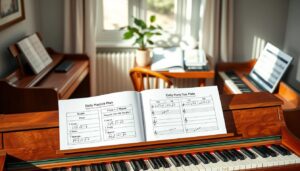
Ever tried playing something beautiful only to have your digits rebel like overcooked spaghetti? Welcome to the club. We’ve all been there, watching our hands betray us at the keyboard.
Here’s the truth professionals won’t always tell you: those magical skills weren’t born – they were built. Think of these drills as cognitive behavioral therapy for your hands.
Like athletes training specific muscles, musicians need targeted conditioning. These routines prevent injuries while developing proper technique that becomes second nature.
It’s the musical equivalent of learning to walk before running a marathon. The secret weapon separating frustrated beginners from those who actually sound competent.
Fundamental Drills Every Beginner Should Know
Welcome to the piano’s basic training. It’s where we teach fingers to move with discipline. Think of it as learning grammar before tackling Shakespeare. These exercises help build muscle memory and neural pathways.
Many beginners jump straight into songs. That’s like running a marathon without learning to walk. The best piano hand exercises are done away from the keyboard. They help develop skills that improve your playing.
Exercise #1: Finger Drills
This is called the “coffee table concerto.” You can practice it anywhere with a flat surface. The goal is to teach fingers to move separately, not together.
How to do the exercise
Place your hand flat on any surface with fingers slightly curved. Now for the magic:
- Keep four fingers firmly planted
- Lift one finger high without moving others
- Hold for two seconds
- Lower slowly with control
- Repeat with each finger
The fallboard exercise is next. Close your piano’s fallboard and press each key without sound. This helps you focus on hand positioning. Your fingers learn to stay curved and strong.
Remember, firm fingertips make clean notes. Floppy fingers make muddy sounds. These exercises are the foundation for all your playing. They show you’re serious about learning.
Consistency is key here. Practice for just five minutes a day. This will help you more than practicing for thirty minutes a week. Your future self will thank you for the effort.
Daily Routines (5-15 min)
Progress doesn’t need to be marathon-long. The 5-15 minute daily routine is like a strong espresso shot. It’s small but packs a big punch without taking up too much time. Think of it as a high-intensity workout for your fingers, focusing on quality over quantity.
Even top pianists use these short exercises to stay sharp. It’s about being fully present with each note, not rushing to finish. Starting with pentascales (5-note patterns) helps build basic skills, not tackle Rachmaninoff right away.
Exercise #2: A 5-note scale
This exercise is key to developing a lasting easy piano technique. The pentascale uses just five notes, like C to G in your right hand. It’s a simple pattern that builds muscle memory without overwhelming you.
Starting with five notes is like learning to walk before running. It focuses on finger independence, even tone, and hand position. You’re not just playing notes; you’re preparing your hands for success.

- Play C-D-E-F-G slowly with each finger (1-2-3-4-5)
- Descend back down: G-F-E-D-C
- Make sure each note sounds the same volume
- Keep your wrists relaxed and fingers curved
- Repeat with left hand starting on lower C
Start very slow. The goal is to perfect each movement, not rush. Your fingers should move smoothly, creating a smooth sound.
Once you can play each hand separately, try them together. This is where coordination magic happens. It might feel hard at first, but it’s normal.
This focused method builds neural pathways for complex pieces later. For more help, check out this piano practice routine for beginners that builds on these basics.
Remember, the metronome is your ally. Start slow (60 BPM or slower) and increase only when you play flawlessly three times. This method makes these short practice sessions incredibly productive.
Improving Hand Independence
Ever tried rubbing your stomach while patting your head? Now imagine doing that with musical notes while keeping calm. Hand independence is like learning to drive stick shift while parallel parking on a San Francisco hill.
This is where most beginners hit a wall. Your brain must process two commands at once. Start simple and build those neural pathways gradually.
Exercise #5: Piano Hand Coordination
This exercise separates piano players from those who just push keys. It’s designed to make your brain handle different hand movements. Think of it as cognitive cross-training for musicians.
How to do the exercise
Start with both hands in C position (thumbs on middle C). Play a simple five-note scale, but with a twist:
- Right hand plays legato (smooth and connected)
- Left hand plays staccato (short and detached)
- Keep a steady tempo – no rushing!
- Switch patterns after 2 repetitions
The legato-staccato combination is hard at first. It’s because it’s hard. You’re teaching your hands to follow different commands from the same conductor.
For more beginner hand independence exercises, try contrary motion practice. Both hands start on middle C and move outward in opposite directions.
| Exercise Type | Difficulty Level | Recommended Practice Time | Key Benefits |
|---|---|---|---|
| Legato-Staccato Contrast | Beginner/Intermediate | 3-5 minutes daily | Neural pathway development |
| Contrary Motion Scales | Beginner | 2-3 minutes daily | Spatial awareness |
| Mozart Simple Patterns | Beginner | 5-7 minutes daily | Coordination foundation |
| Articulation Switching | Intermediate | 3-4 minutes daily | Mental flexibility |
Mozart’s simpler pieces are great for this. They often feature mirrored patterns between hands. It’s like training wheels for hand independence – you’re doing different things, but with structural symmetry.
Remember: consistency beats intensity. Five minutes of focused practice daily will build those neural pathways faster than one marathon session weekly. Your hands aren’t actually independent; they’re learning to dance to different rhythms from the same musical brain.
Preventing Strain and Injury
Injuries can sneak up on you when you least expect them. Many musicians don’t see the danger until they feel pain. Luckily, most piano injuries are preventable with some basic steps.
Playing with cold fingers is like running a marathon without warming up. You wouldn’t sprint without stretching first. This can lead to long-term problems like arthritis and carpal tunnel syndrome.
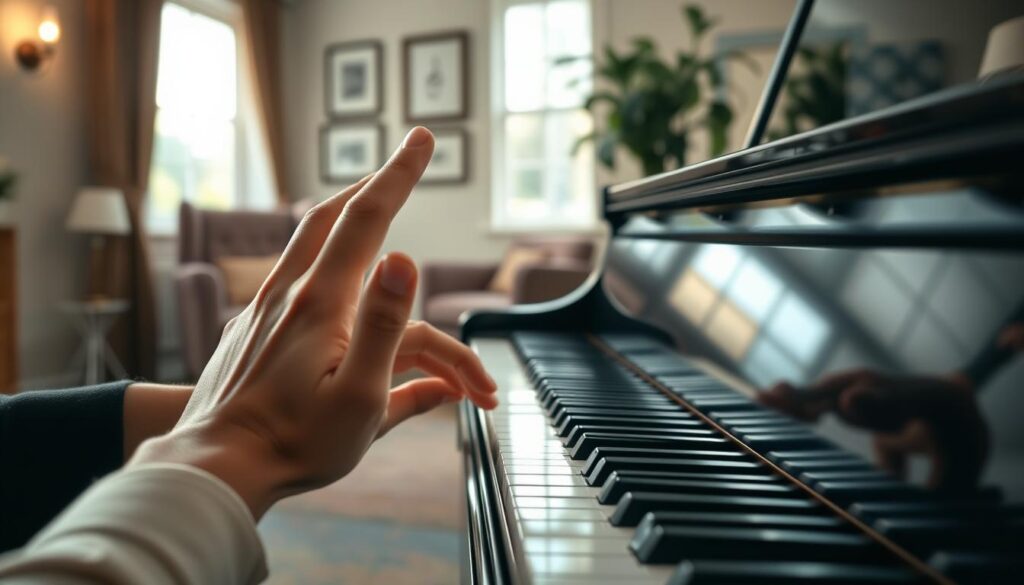
PRO-TIP 1: Exercise before you practice
Think of your pre-practice routine as the opening act. Spend 5-10 minutes on gentle piano finger exercises. Start with simple stretches and then do basic drills.
This isn’t about showing off. It’s about getting your muscles ready for practice. Your future self will thank you for this.
PRO-TIP 2: Take advantage of your free time with piano-less exercises
Some of the best finger exercises for beginners are done away from the piano. Tap each finger separately on a table while waiting for coffee. Do hand stretches during TV commercials.
These small exercises build endurance without the pressure of perfect performance. They’re like small investments that grow over time.
Proper hand position is key to avoiding injuries. It’s like investing in your musical future. Don’t risk your long-term playing ability for short-term gains.
The goal is to build gradually and sustainably. Treat your hands with the respect they deserve. They are your most valuable instruments.
Tips for Consistent Progress
Keeping up with a piano practice routine can be tough. It’s like trying to keep a New Year’s resolution past February. The excitement wears off, and it starts to feel like a chore.
But, there’s a secret. It’s not about being more disciplined. It’s about using a better strategy.
PRO-TIP 3: Mix it up!
Variety is key to making progress in music. Think of your practice like a playlist, not a single song. Doing the same thing every day can be boring and hurt your progress.
Consistency doesn’t mean doing the same thing every day. It means showing up regularly and keeping your mind active. Mix up your practice with different finger drills, technical exercises, and songs. Use apps like Skoove for feedback that makes practice fun.
Start with finger drills as a warm-up. They get your hands and mind ready for more challenging work. This way, different parts of your practice support each other.
When should you do finger strengthening exercises for piano?
Timing is important. Do your finger exercises right at the start, after warming up. This gets your hands ready and keeps your mind sharp.
Think of it like stretching before a workout. You wouldn’t run a marathon without warming up. Finger exercises prepare your hands and mind for the rest of your practice.
The best players treat their finger drills as a daily habit. Spend 5-15 minutes on technical work each day. It’s about small improvements over time, not perfection right now. Your future self will appreciate it.
Tracking Improvement
How do you know if all those hand exercises piano routines are actually working? It’s like trying to notice your own hair grow. You need benchmarks.
Three practical songs for finger exercises
Forget boring drills. Use real music to measure progress. These songs test specific skills while being fun to play.
Song #1: You Are the Sunshine of My Life
Stevie Wonder’s classic is perfect for basic five-finger position practice. It’s the musical equivalent of a brisk walk—simple, melodic, and great for building consistency.
“House of the Rising Sun” challenges your hand with position changes. “Copacabana” forces that dreaded thumb-under technique. Both are excellent for advanced hand exercises piano practice.
Revisit these songs monthly. Notice how what felt impossible now feels manageable. That’s progress. Your fingers are getting smarter.