Not long ago, young pianists built their reputations through competitions, conservatories, and concert halls. Today, many are doing something very different—they’re going viral.
From livestream platforms to short-form video apps, a new generation of pianists is reaching global audiences instantly. A recent example is a 9-year-old pianist whose performance gained widespread attention after circulating online, showcasing remarkable control and musical maturity at an early age.
This shift is changing not just how musicians are discovered, but how piano is learned, practiced, and shared.
The New Stage: Social Media Platforms
Platforms like TikTok, YouTube, and Twitch have become modern performance spaces. Unlike traditional venues, these platforms reward:
- immediacy
- creativity
- personality
Young pianists can now upload a performance and reach thousands—or even millions—of viewers within hours.
This has created a new pathway to recognition. Instead of waiting years to build a reputation, talent can be discovered almost instantly through digital exposure.
Why Piano Content Goes Viral
Piano performances are particularly well-suited for viral content because they combine visual and auditory appeal.
Viral performances often share common traits:
- recognizable melodies or creative arrangements
- strong emotional delivery
- visible technical skill
- short, engaging formats
In some cases, performers blend genres—classical with pop or even hip-hop—to capture broader audiences. This crossover approach has helped bring piano music into mainstream digital culture.
The Rise Of Young Prodigies Online
What makes this trend especially notable is the age of many viral pianists.
Young performers are gaining attention not just for their ability, but for the contrast between age and musical sophistication. A child demonstrating advanced technique creates a powerful visual and emotional impact.
Historically, prodigies like Ethan Bortnick gained recognition through television and live performances. Today, similar recognition can happen through a single viral video, dramatically accelerating exposure.
This doesn’t replace traditional training—but it changes how quickly talent becomes visible.
How This Changes Piano Learning
The influence of viral performances is extending into how people learn piano.
Students are now exposed to:
- diverse playing styles from around the world
- unconventional repertoire and arrangements
- real-time performance standards
This creates a more dynamic learning environment, where inspiration is constantly accessible.
For beginners, this can be motivating—but also overwhelming. The key is to translate inspiration into structured progress. For example, building control and clarity through piano technique exercises helps bridge the gap between watching and actually playing.
Performance Style Is Becoming More Important
Another major shift is the emphasis on presentation.
In traditional settings, performance was judged primarily by accuracy and interpretation. Online, visual engagement matters just as much.
Successful performers often show:
- confident body language
- expressive movement
- strong connection with the music
This aligns closely with trends in broader entertainment, where personality and presence are essential.
The Role Of Accessibility And Technology
Technology has made this transformation possible.
With just a smartphone and a digital piano, young musicians can now:
- record high-quality performances
- edit and share instantly
- interact with audiences directly
The barrier to entry has never been lower. As a result, more players are experimenting with performance earlier in their learning journey.
You can see how digital platforms are shaping music education more broadly through modern music learning platforms, where accessibility and engagement are becoming central priorities.
The Downsides Of Viral Piano Culture
Despite the opportunities, there are challenges.

Viral success can sometimes prioritize:
- speed over control
- visual appeal over sound quality
- short clips over deep musical development
This can create unrealistic expectations for learners, especially beginners who compare themselves to highly advanced performers.
It’s important to remember that behind every viral performance is usually years of structured practice and training.
What Young Pianists Should Take From This Trend
The rise of viral piano content offers valuable lessons—but only if approached correctly.
The most important takeaways are:
- use viral performances as inspiration, not comparison
- focus on building consistent technique
- develop both musical skill and performance confidence
Social media can be a powerful tool—but it should support learning, not replace it.
A New Era Of Piano Visibility
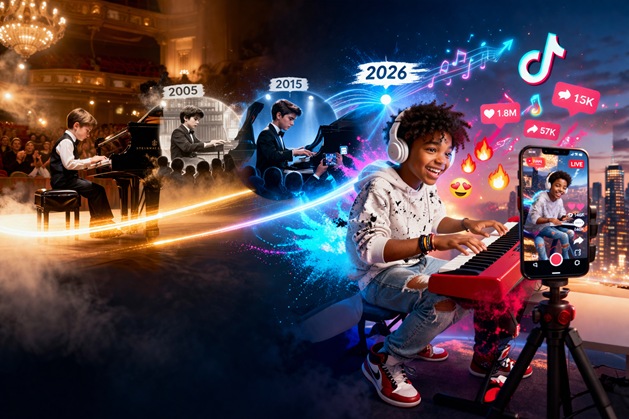
The journey from concert hall to TikTok represents more than just a change in platform—it reflects a shift in how music is experienced.
Piano is becoming more visible, more accessible, and more connected to everyday life. Young pianists are no longer limited to traditional paths; they can share their progress, creativity, and talent with the world in real time.
And while the stage may look different, the foundation remains the same:
discipline, technique, and a genuine connection to the music.